You never need a cup of coffee tomorrow. You need it now. An empty bag signals panic, tragedy, and a trip to the store in your pajamas. The WIRED guide to the best coffee subscriptions is designed, in part, to make sure this moment never happens.
The promise of the internet is that you can access the best coffee delivery services in the country, and therefore the best coffee, from anywhere you live. The WIRED Reviews team has been testing and recommending monthly coffee subscriptions since 2018, when online coffee ordering became the norm. I've been writing about coffee on both coasts for more than 15 years, and it's not unheard of for me to go through four bags a week while testing coffee machines .
Even though I live in the coffee mecca of Portland, Oregon, online subscriptions have been a source of constant discovery. My top coffee subscription for most people, Atlas Coffee Club , brings in flavors from all over the world in a round-robin. Trade Coffee appeals to the widest variety of palates for cold brew, espresso, or drip. Podium Coffee Club offers wild surprises for true aficionados, among prize-winning coffee.
This list represents the best and most interesting coffee bean subscriptions of 2026. Be sure to check our other java-related buying guides, including the Best Drip Coffee Machines , Best Mushroom Coffee , Best Espresso Machines , Best Cold-Brew Coffee Makers , Best Latte and Cappuccino Machines , and Best Coffee Grinders .
Updated September 2026: I’ve newly tested and added Beanz coffee subscription as a top pick, streamlined WIRED' s selections, updated prices and descriptions, rearranged and retested some subscriptions, and updated tariff information.
Atlas Coffee Club offers a true world tour of coffee: high-quality, single-origin beans from a different far-flung part of the world each month. This includes lesser-known coffee-producing regions such as Thailand or Yunnan, China, or a truly rare, chocolaty-nutty bag from Uganda.
Each month, the Austin, Texas-based roaster offers beans from a different region—whether an Indian variety that tastes gently of marzipan, or one from Peru that brims with toffee. Those countries and farms keep changing, as Atlas forms new relationships with growers all over the world. I find the monthly switch to be an excellent rhythm for espresso in particular, since I'm dialing in a new bean for a new flavor each month.
Atlas’ roasts are excellent, the bags look pretty, and the service is outstanding. Because Atlas is the sole importer and roaster of each bean variety, you skip the middleman and save money. Each bag arrives at your doorstep at a price competitive with the premium (but far less fresh!) beans at your local supermarket. Bags are a full 12 ounces—not the diet bags that have become popular among many subscriptions and roasters.
Choose between light-to-medium or medium-to-dark roasts, remaining mostly in the fat part of the bell curve where aromas are most pronounced and easy to extract. Whatever the region or roast, I've also found that Atlas' roasting profile tends to lead to a smooth character that's common among Atlas’ beans. Then choose between classic balanced or premium “bright and expressive” bags for $2 more that'll lean more into the distinctive agriculture and flavor notes of each region. While a medium-roast Finca Arbelia bag from Guatemala might bring out mid-palate toffee notes, the “bright” bag evinces much lighter notes, like a Southern peach tea.
Subscriptions can be monthly or bimonthly. There is no weekly option, though you can adjust order size from a half-bag to four bags. (You get the best deal if you order more bags, less often.) You can also choose whether you'd like to receive whole beans, your favorite grind for your favorite brewing method, or pods fit for Keurig or Nespresso. Atlas also offers a world tour coffee subscription box that's excellent as a gift. Atlas' mushroom coffee subscription also earned top billing in our guide to mushroom coffees . And newly, you can choose a wee 4-ounce bag of ultra-rare beans as a subscription add-on. A recent Atlas Rare bag from Myanmar tasted light and almost spiced, with top notes a bit like mulled cider.
For National Coffee Day until October 5, note that the first bag of any Atlas subscription is just $5. Otherwise, Atlas generally has a rotating coterie of introductory deals—including half-off or BOGO deals.
Roaster. Delivery: Every two or four weeks, anywhere from a half-bag to four bags per shipment. Coffee changes each month. Priced $15–$20 per 12-ounce bag, depending on order size and preferences. $6 shipping.
Trade Coffee is like a helpful ferryman, a multi-roaster retail subscription that sources beans to your door from small roasters all over the country. Choose a bag to receive over and over, or let Trade choose for you by choosing a curated subscription.
To determine your tastes, Trade will ask you a series of questions about what you want out of your daily dose of caffeine: how you brew and drink your beans (with milk, without, etc.), how dark you like your roast, and whether you like balanced flavors or bold and bright. If you'd like, you can dial this in even further to individual flavor notes, whether chocolate, nuts, fruit, or floral.
At the end, you'll learn what bags are coming based on your responses. Perhaps this'll be a roasty espresso blend from Feast Coffee in California, or a light-bodied Kenyan from Tennessee that tastes like citrus and berry. Right now Trade is offering new subscribers a three-bag “discovery box” with three 11-ounce bags for $34.
In my experience, Trade tends toward fairly approachable coffees, tailored to your favorite flavor notes. Their selection is huge, with well over 400 bags to choose from, and Trade is constantly adding new roasters and beans to its stable. This means you never have to repeat a bag if you don't want to. But more importantly, this makes Trade's subscription a great way to discover new brews, new growers, and new roasters. Last year, Trade added a cold-brew subscription with at least 90 bags specifically selected for how good they taste when brewed cold; new subscriptions come with a cold-brew device.
Retailer. Delivery: Every two or four weeks. $17 to $22 per one 11-ounce bag. Free shipping on orders $75 or more, or $8 to $12 per shipment.
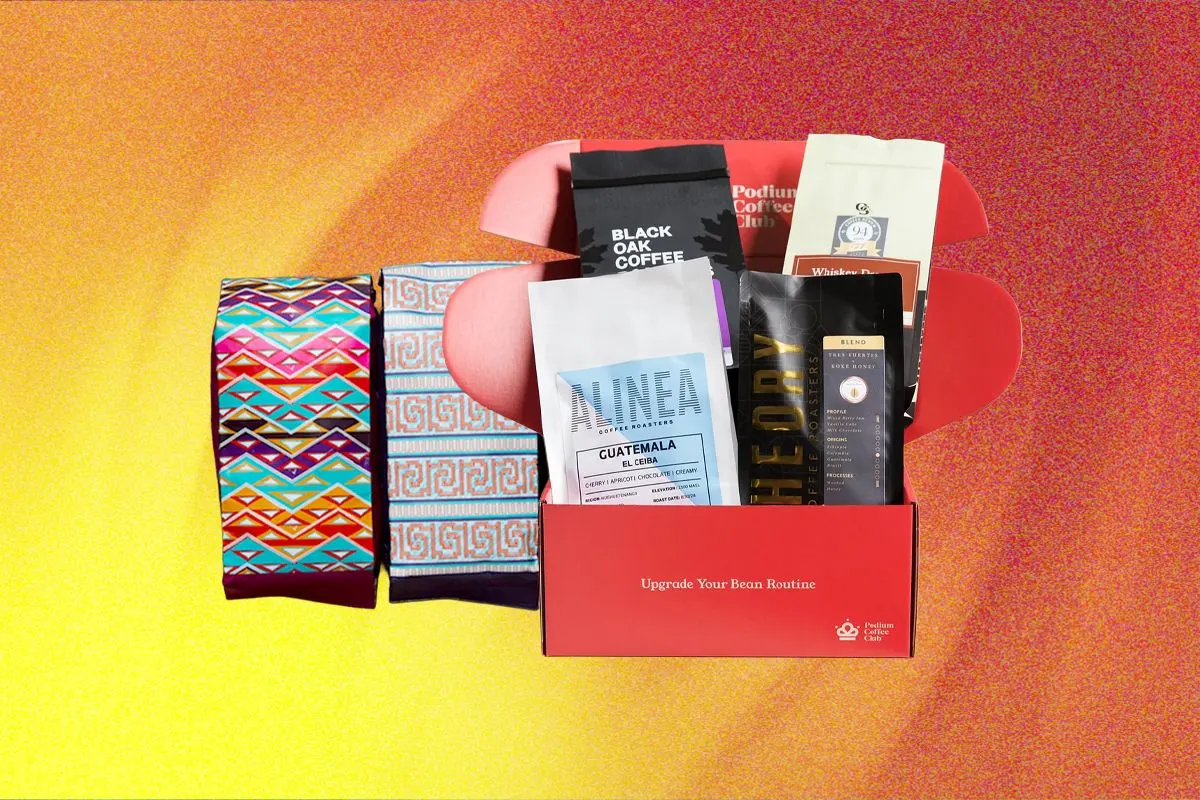
Podium Coffee Club is the best way I know to sample the best beans, from the best roasters, all over the country—primed especially for aficionados and people who think they already know everything about coffee. I'm one of these people, and yet Podium keeps surprising me by introducing me to truly excellent small roasters like Seattle's Cozy Monster and coastal Oregon's Kissing Rock that I would not otherwise have known existed.
Basically, you choose either the Gold or Platinum subscription, which are priced accordingly, and then you receive one—and only one—ridiculously good bag of coffee each month, roasted within 24 hours of when it's shipped. True to Podium's name, each roaster or bean has been awarded by a national or international competition as some of the best coffee in the world. To quote Men in Black : “The best of the best of the best, sir! With honors.”
Your bags arrive with a little card explaining why each single-origin varietal, and each roaster, is so gosh darn interesting. After testing multiple months' worth of beans, I can say each coffee from Podium has been interesting, special, or downright unique in some way—especially a bag of beauteously floral and pine-forward beans from Colombia growing legend Elkin Guzman, roasted by Podium cofounder Sam LaRobardiere's excellent coffee brand Theory Coffee .
Expect light-roast beans, best for lovers of drip, pour-over, and Aeropress. ( Light-roast espresso lovers will also find a home here.) The Gold subscription is generally excellent, balanced, and aromatic. The Platinum tends to be adventurous, surprising, or maybe just rare: It's coffee that tastes like other coffee doesn't.
So far, I've had no misses. Consider Podium a source of discovery, and an indulgent gift to yourself (or someone you like) each month, to supplement your more usual coffee habit. It does cost what an indulgence costs, however.
Multi-roaster. Delivery: Monthly. $25 (Gold) or $20 (Platinum) per 10.5-ounce bag. Also available in 3-pound or 5-pound bags.
Seattle-based Bean Box was a pioneer among multi-roaster coffee subscriptions, and it still has one of the largest selections of roasters to choose from if you pick out your own bags. In particular, while a lot of the newest, trendiest coffee subscriptions lean funky and fruity and light, I've found that the curation for Bean Box leans toward depth, balance, and rich chocolate or toffee notes.
Bean Box's full-flavored, rich coffee selections are perfect for lovers of the brown-sugar and coffee notes often favored by lovers of cold brew and traditional espresso. Indeed, Bean Box's espresso-specific subscription is quite the best coffee subscription for espresso lovers that I've yet found. Every two to six weeks, you'll receive a new and expertly curated bag of beans that's good for rich, syrupy shots and full-flavored lattes.
Bean Box's prices are often low for retail craft coffee of this caliber, the bags are big (or at least they're the full 12 ounces), and prices can often beat direct-ordering from the roaster if you subscribe. But take note that for most options, you'll be adding $6 to $8 for shipping on each delivery.
Bean Box isn't just for espresso, however. Drip or pour-over lovers who favor balance and chocolatey notes over funk and fruit may find a home here. Even many of the light roasts meant for pour-over often favor balance and roundness, like a truly excellent single-origin Ethiopia by Seattle's Middle Fork Roasters.
Retailer. Delivery: Once every two to six weeks. Priced per 12-ounce bag.
Beanz is a coffee subscription service I had not encountered until quite recently, and it's been a wonderful discovery. This is a smaller coffee subscription, but it's also one of the best-selected subscriptions I've encountered if you're looking for roasters on the forefront of both sourcing and interesting flavors.
If there's a super-special coffee roaster that java insiders like to whisper to me about, it's often available on Beanz. Recent drops included funky blends from Australia's adventurous Proud Mary, a beautifully balanced light roast from Pennsylvania Amish country's cult-popular Passenger Coffee, and a wildly distinctive blend from hipster-beloved YES PLZ out of Los Angeles.
The other surprise is that Beanz is owned by Breville, and by extension Baratza coffee grinders. This means new owners of Breville or Baratza machines get 25 percent off on coffee , with up to hundreds of dollars in savings over the course of a subscription. This is the sort of discount that inspires true loyalty: It means better prices than if I'd ordered directly from the roasters, on some of the best and most exciting coffee in America. Hot dang.
If you don't have Breville or Baratza, prices are still quite good, and the coffee is still delicious. But take note that there's a two-bag minimum on subscriptions—which is less flexible than most roasters if you're a solo coffee drinker.
Retailer. Delivery: Once every two to eight weeks. $20 per 12-ounce bag.
One of my favorite bags of light-roast coffee I tried last year came from Equator Coffee. It was funky, cool, weird, and roasted feather-light, a single-origin bag from Mae Chedi in Thailand with tasting notes of raspberries and aged rum. But then one of my favorite decaf bags came from Equator, too: a lovely single-origin Ethiopian that was gently reminiscent of a chocolate blueberry muffin.
This 30-year-old Bay Area pioneer, once a maverick best known for roasting the French Laundry's house blend from its founding partners' Marin County garage, is now a powerhouse. Equator offers wonderfully diverse tastes, sourced from farms in 50 countries—one of few single-roaster subscriptions to rival any multi-roaster in breadth, depth, and the capacity for surprise.
Equator's coffee bean subscriptions include wild single-origin coffees , espresso-friendly roasts , fair trade and organic beans , and balanced blends . A rotating supply of interesting decaf is also available as a subscription. These days, Equator is maybe the oldest craft roaster to still consistently taste so fresh. Just pick your style and let the coffee come.
Roaster. Delivery: One through eight weeks. Priced per bag, generally $19 to $22 for 12 ounces.
Decaf has come a long way, with a few new-school, more natural decaf makers that have emerged as the jitter-free darlings of the premium coffee world. Perhaps the most famous is British Columbia's Swiss Water, the company behind the Swiss Water decaffeination process , which provides decaf to some of the best premium roasters across the United States. But Swiss Water also offers its own subscription service to bring you some of the very best decaf roasts—genuine heavy hitters that remain full-flavored, robust, and delicate without keeping you up at night.
Retailer. Delivery: Weekly, biweekly, monthly, or bimonthly. Priced per bag.
No matter where the beans come from, nearly all coffee sold in the United States is roasted in the US, often after sitting in a warehouse for weeks or months. But Origin Roasted is truly globetrotting and truly seasonal. Each month they send a 10-ounce bag of specialty beans that are roasted, packed, and then shipped directly from the same part of the world where the coffee was harvested.
Shipping straight from the source within one to three days of roasting means the beans are not merely fresh, but roasted in season. It also means the beans will be a cosmopolitan affair, roasted according to the tastes of exotic locales. A side benefit is that more of the proceeds from sales go directly to the growers and roasters in their home countries.
WIRED reviewer Michael Calore has been drinking Origin Roasted coffee since the service launched five years ago—and anecdotally, fresh bags roasted when the fruit's still fresh … taste fresh. They also retain floral and fruity notes you can't find in supermarket bags. But Origin's beans are also pretty special, and hard to find. Calore's favorite bags (Jalapa Producers from Guatemala, Azahar from Risaralda, Colombia) are actually cheaper through the Origin subscription than if you tried to find them individually.
Roaster. Delivery: Ships on the last Friday of every month. $25 per 10-ounce bag.
Cometeer is unlike any other coffee subscription I have tried. It arrives frozen, as a little pod that you can thaw out with hot water. I was, of course, skeptical. But I couldn't believe how aromatic and straight-up distinctive each roast was, despite being flash-frozen.
In part, that's a function of the coffee itself. Cometeer pods contain brew from some of the finest specialty roasters in the world—Black & White, Onyx, Proud Mary, you name it—that's been brewed and condensed with the power of science , then flash-frozen and vacuum-packed to maintain freshness. All you've gotta do is drop them into a cup, then thaw them with 5 ounces of boiling or near-boiling water. And then, blammo—an oddly terrific cup of coffee, miles above powdered instant or pods. It's not quite the same as a fresh cup: The mouthfeel is different. The flavors are rounder, smushier, and less crisp. But on light roasts especially, the aromatics are big, bold, and wild. I truly enjoy it.
They don't come cheap if you order a single box at a time, but subscription prices are reasonable—about $2 a capsule for very fancy beans. They'll keep in the freezer for months, but you'll need to drink them soon if you thaw them: They keep full flavor for one day at room temp or three days in a cooler or hotel fridge. The introductory box these days is a wild and woolly world tour of coffee beans with 32 capsules from 16 coffee-producing countries.
Retailer. Delivery: Variety packs or single-varietal packs arrive once every four weeks.
Bean & Bean sources some of the rarest and most precious coffee beans on the planet, and roasts them to delicate fruition. There are only about 400 certified Q Graders in the United States—basically, the master sommeliers of coffee. Two of them are the mother-daughter team of Rachel and Jiyoon Han at New York's Bean & Bean. Together, they roast some of the world's most exquisite beans , like Geshas from Taiwan and honey-milled Cup of Excellence winners from El Salvador.
You can shop these bags individually. But the more fun option is to let the Hans surprise you with their favorite ridiculously rare light roast of the moment . It's a more expensive subscription than some, and bag size may vary depending on the expense of each rare bean. But you have probably never tried coffee like the bag that will arrive at your stoop.
Roaster. Delivery: Depending on subscription type, anywhere from weekly to monthly. Priced per bag or selection.
There are two main kinds of coffee subscription providers: roasters and retailers. Both roasters and multi-roaster retailers sell great coffee. This guide includes both.
Roasters are cafés and small-batch producers who buy raw beans from farmers all over the world and roast them to perfection. By buying from a roaster, you're directly supporting the people who make your favorite coffees. The downside is you usually won't have as broad a selection. Roasters usually sell only their own coffee, but that often means special blends and single origins are available from a roaster that you can't get from a retailer. Your local roaster down the street may also have subscription offers, giving you the chance to buy local without leaving your house—and often catch a discount.
Retailers or multi-roaster subscriptions are coffee subscription providers who buy their beans from many different roasters, then ship bags of coffee to you. A multi-roaster retailer will often have a much broader selection of high-quality coffee available (from multiple brands) to ship to your doorstep—often selected and curated carefully by coffee experts. The downside of some subscriptions is that you're not buying directly from a roaster, which means the coffee may not be as fresh. (That's where this guide comes in. We can tell you how fresh they are because we always test each one and note the roast dates on each coffee bag.)
Look: If you live in a big city with great coffee, the best way to try fresh roasts and new beans, and learn about them, is to go to your local roaster. Nearly every midsize city in the United States has at least a couple of excellent purveyors. Look up your local coffee roasters or visit your favorite coffee shop and ask where they get their beans. Buy the beans. Talk to people. It's fun, if you like talking to people.
Heck, this is also true when you're traveling. The best coffee you can find is often the cup you drink when you're on the road, in a new place, tasting something new. Even if you don't live on the road , it's fun to explore different shops when you do travel.
But the wonder of the internet is that you're not limited to only the best of what's local. Subscriptions allow you to take the temperature of the most interesting roasters from all over the country and world, without going anywhere in particular. Heard about that one roaster in Delaware or North Carolina making crazy coffee with co-ferments and natural fermentation? A roaster in Guatemala highlighting beans from their neighbors? Are you new to the world of premium coffee, and you'd like some help from the curators at Trade Coffee or Podium Coffee Club to learn what you like? Let them inform and surprise you.
This is why you might take a subscription. The world is at your door—even the world you've never even visited. I'm also lazy enough to order subscriptions from roasters a 15-minute drive away, but this is between you and your local ecologist.
But also, sometimes it's homesickness for what used to be local. For me, one of the best in this country is a tiny spot in South Jersey called Royal Mile . They used to be my favorite local coffee shop when I lived in Philly and would drive to Jersey to get the coffee. Now they aren't local at all, because I moved. But through the magic of the internet and the US Postal Service, I can still get their truly wild, surprising, mad-scientist single-origin bags anytime I want. What a privilege.
To test these subscriptions, we try a variety of beans from each service, both our own picks and any curated options. We brewed each bag in different ways to see which beans were best suited to which brewing method. Over the subscriptions he tested, Scott Gilbertson covered the spectrum of grinds with espresso, moka pot, French press, pour-over, and Turkish or cowboy coffee. Matthew Korfhage wanders through espresso, AeroPress, drip, cold brew, pour-over, and a wealth of somewhat unclassifiable devices.
It's worth doing the same if you have access to different brewing methods, especially if you opt for a subscription that offers a lot of variety. A roast that makes a great shot of espresso does not necessarily make the best pour-over coffee, and vice versa. Some roasters, like the excellent Equator Coffee , offer one subscription specifically for espresso, one for decaf, and another for light single-origin roasts that lend themselves to drip and pour-over. It can also be rewarding to take notes on your favorites. Some of these services offer a way to do this on the site, which is handy, though a paper notebook works well enough. If you'd like some more pointers on brewing, be sure to read our guide to brewing better coffee at home .
A coffee subscription service often offers discounts on shipping or the base cost of each bag, compared to buying single bags for delivery. But usually, subscriptions will be premium beans, so it won't be as cheap as the less-fresh, often pre-ground coffee from your grocery store.
But if you're the sort who likes to try the best freshly roasted single-origin Ethiopian or Guatemalan beans from roasters all over the country? This is where coffee subscriptions shine. You're also often getting the best specialty bags a roaster has to offer, or a curated selection from a certified Q Grader—meaning you're a lot more likely to find new roasts and origins you wouldn't have come across on your own.
I have no dearth of local roasters that I love to support. Portland, Oregon, where I live, is perhaps the densest home to craft coffee in the country: Heart , Coava , Stumptown , Roseline , Sterling ; multiple national coffee publications ; and a craft coffee festival . I've been writing about coffee in Portland and elsewhere for more than a decade.
But a coffee subscription gives me access to beans from all over the country and world. It's a mix of ease and adventure, and a chance to be a barista at my own home multi-roaster café. I enjoy that I can get fresh-roasted beans from a coffee farm in Guatemala that roasts their own impossibly fresh beans onsite, alongside world-famous beans from other farmers right down the road—or taking a world tour each month with beans from my favorite globe-hopping roaster, Atlas Coffee Club.
But for others, a coffee subscription is just a way to get a steady drip of their favorite bag from their favorite roaster, guaranteed to arrive every week or every two weeks. Simple convenience is its own form of worth it.
There's a lot of good coffee out there, and I am always trying something new—drip, espresso, cold brew. I've been writing about coffee for 15 years on both coasts, and I'm always on the lookout for new and exciting growers, roasters, and beans. I keep abreast of coffee industry publications like Sprudge , haunt subreddits, consult friends and industry contacts, and take tips.
Coffee can be subjective, of course, and …