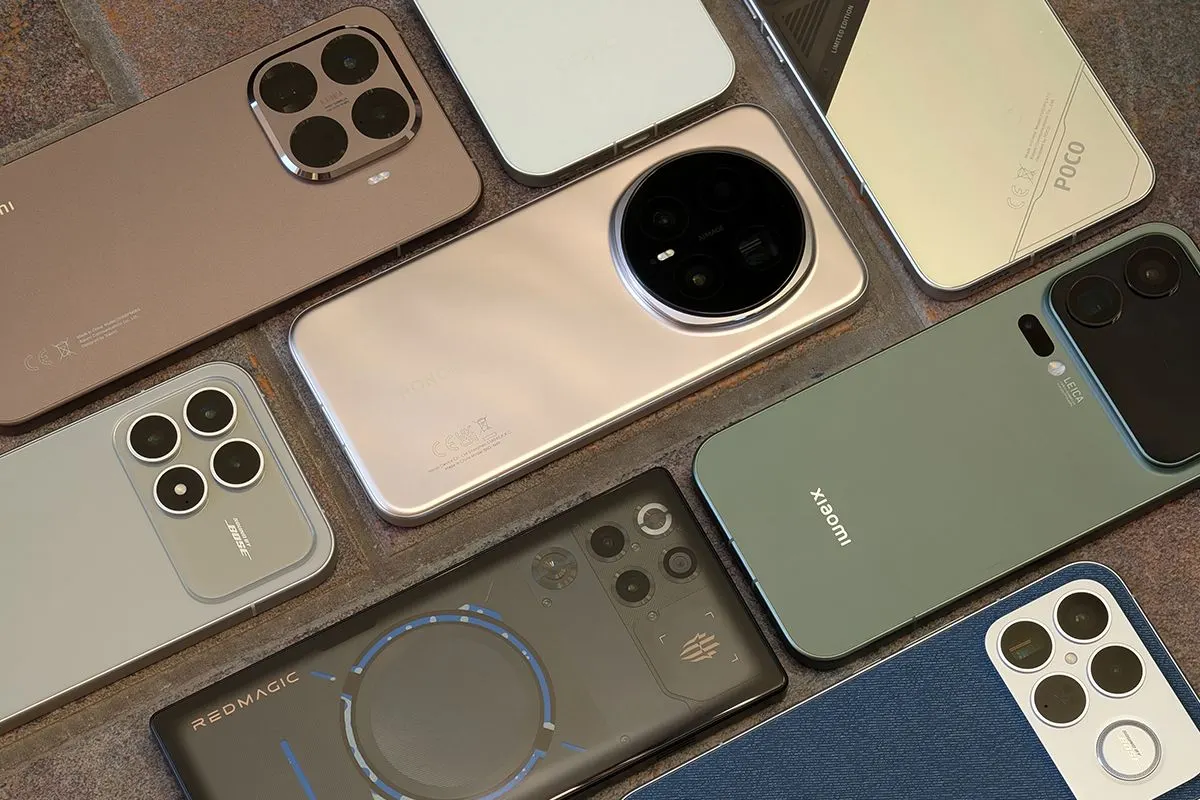
There’s a world of excellent phones—flagship smartphones that push photography to new levels and budget buys that confound expectations—that you won’t find in the US for various reasons. Some Chinese phone manufacturers are banned domestically, while other brands prefer to focus their efforts in countries where Apple doesn’t have a massive market share. Whatever the explanation, I have a strong grasp on the best phones you can’t officially buy in the US, having tested the global handsets for years.
Many of these Chinese phone manufacturers release multiple devices under sub-brands. With that in mind, here’s some basic information: Xiaomi is the brand behind Poco and Redmi; Nubia came from ZTE; Honor was a subsidiary of Huawei but separated after Huawei was banned in the US; and Realme spun out of Oppo. It’s also worth noting that folks in the UK and elsewhere in Europe can also buy many of the phones in our guides to the Best Android Phones , Best iPhones , and Best Cheap Phones that are on sale in the US.
Updated July 2026: I added the Honor Magic V6, Nubia Redmagic 11S Pro, Honor 600, and mentions for the Xiaomi 17T and 17T Pro; removed some older devices; and updated prices throughout.
The latest flagship sailing out of Xiaomi is the 17 Ultra (there was no 16), and I’m ready to crown it camera king. The now familiar design, with that huge circular camera module on the back, has ostensibly dropped a lens, but the main 50-megapixel shooter boasts a new 1-inch sensor and lens pairing that helped me capture stunning shots in a variety of scenarios. There’s just one telephoto lens on this edition, but it’s a 200-megapixel shooter that slides between 3.2X (75 mm) and 4.3X (100 mm) optical zoom. A 50-megapixel ultrawide and a 50-megapixel front-facing camera round out a truly top-notch camera system.
The rest of the phone ain’t bad either, with a flat 6.9-inch OLED display, speedy processor, and generous RAM and storage. You also get improved battery life and fast wired or wireless charging. I love the speckled green finish (regular black or white are options). Xiaomi has committed to four Android updates and six years of security patches, too. But no device is perfect, so you’ll have to deal with flaws like bloatware, Xiaomi’s HyperOS software, and that colossal camera bump. I also think Xiaomi’s AI features are slightly below par.
Last year, Xiaomi leaned in to its partnership with Leica with the 15 Ultra, but it goes even further with the special edition Leitzphone (£1,699, about $2,252) . If you don’t mind spending a chunk more, this retro-camera-style beauty adds Leica touches inside and out but retains everything that makes the Xiaomi 17 Ultra so good.
For cutting-edge camera performance and AI assistance across the board, Honor’s Magic 8 Pro is tough to beat. While there are no major leaps here, the Magic 8 Pro brings a raft of refinements over Honor’s Magic 7 Pro . A slimmed-down design featuring subtle curves makes this a lovely phone to handle, and Honor has managed to pack in a much bigger silicon-carbon battery . The versatile camera can also zoom in further (3.7X optical zoom) and handles low light and shaky hands with aplomb (night photography is especially strong). That said, the image processing can be heavy-handed at times.
The 6.71-inch screen is gorgeous, razor-sharp, and gets very bright. Honor’s Magic OS 10 is seriously slick atop Android 16 (probably the best software of any manufacturer in this guide). This phone is imbued with Honor AI that genuinely adds value, from photo editing to contextual task handling, and you can bring it to life with the dedicated AI button. There’s also support for Google Gemini, if you prefer. This is definitely not a phone for AI skeptics. Throw in secure face unlock, incredibly fast wired (100 watts) and wireless charging (80 watts) with the right gear, plus seven years of Android and security patch updates, and you have a supremely sophisticated smartphone with very few discernible weaknesses.
The first folding phone to win me over was the Honor Magic V3 . The Magic V5 (there was no V4) was slightly better, and the Magic V6 is another incremental improvement that brings better battery life, faster charging, and greater durability in a very similar book-style foldable form (4.1 millimeters open, 8.8 mm closed), ignoring the sizable camera bump. There’s also an interesting new red-and-gold finish with a vegan leather back that you’ll love or hate (black, white, and gold are available for the less adventurous). It’s a pleasure to use and feels close to a regular phone when closed, but it has two lovely screens (6.52-inch and 7.95-inch), a versatile camera, and a responsive fingerprint sensor in the power button. Honor’s MagicOS software includes potentially useful foldable and AI features, though I could live without all the bloatware.
Fitting flagship cameras into folding phones is tough, so they usually end up with a big camera module that undermines the svelte design and catches on your pocket. Honor has managed to keep the same excellent camera system as the V5 but slimmed that bump a bit in the V6 (it’s still big, though). It captures lovely photos in most scenarios, though the cameras in the Xiaomi 17 Ultra and Honor’s Magic 8 Pro are both slightly better. But the V6 does feel like a flagship, and this is a phone with no obvious weaknesses. Battery life is excellent, it charges up very quickly, performance is smooth, and the software is mostly slick. If Honor sold it in the US, the V6 would be a serious contender for top place in our Best Folding Phones guide.
If you’re a mobile gamer purist, the Nubia Redmagic 11S Pro is for you. From the transparent industrial design with built-in fans and RGB lighting to the unbroken, almost bezel-free 6.85-inch AMOLED (active-matrix organic light-emitting diode) screen and 144-Hz refresh rate , this phone is built for gaming. You also get a whopping 7,500-mAh battery and customizable capacitive-touch shoulder triggers. Qualcomm’s Snapdragon 8 Elite Gen 5 ensures snappy performance (overclocked here) and is backed by speedy RAM (LPDDR5T) and storage (UFS 4.1 Pro). The 11S Pro can run all your favorite mobile games, cranked to the max. The cooling is highly effective, and there’s a dedicated game space and mode. It also supports Wi-Fi 7 and has a 3.5-mm headphone port (a rarity nowadays).
This iterative update to the 11 Pro—itself a slight update on the Redmagic 10S Pro, which was a slight update on the 10 Pro (you get the picture)—is almost indistinguishable from that previous model. This pointless mid-cycle update purports to offer improvements over the 11 Pro (overclocked processor, better cooling), but the only difference you’ll notice is the hefty price bump. It still wins the dedicated gaming phone category, but that’s mostly due to the lack of any competition. The camera still disappoints; the main 50-MP shooter is passable, but it’s paired with a 50-MP ultrawide (I’d prefer a telephoto) and a subpar underscreen selfie camera. The software is also shoddy in places.
While the 11S Pro boasts stunning performance for the price, the virtually unchanged clunky design, software, and subpar camera erode its bargain credentials, particularly if you’re not using it for gaming.
The impressively affordable Honor 600 is a tempting package that includes a crisp, bright AMOLED display, long battery life, top-notch water resistance, and a powerful main camera. The design is derivative; my review unit apes the orange iPhone 17 Pro with the same color and camera module. But it feels nice in hand and can survive a dunk in fresh water. The Snapdragon 7 Gen 4 processor is fast enough for most folks; I had no issues switching in and out of apps and shooting up the opposition in Call of Duty: Mobile . The battery life is great (even if Honor did cut down the size compared with the Chinese version), and this phone is quick to charge when you plug it in (it lacks wireless charging). The main 200-megapixel camera is very good, and it enables a decent level of zoom through cropping. Honor includes a bunch of AI camera tricks in the software if you want to play around.
But for all its strengths, the Honor 600 is ultimately a mixed bag. Shortcomings include a weak 12-megapixel ultrawide, the sometimes overzealous AI that makes shots look unnatural, and the pernicious presence of bloatware. The 8 GB of RAM also feels stingy. But flaws aside, the reason the Honor 600 claims this spot is the price. At the time of writing, you can snag this at Amazon for less than £550 (about $729). If you want better performance and wireless charging, you can opt for the 600 Pro, but for a price of hundreds more, it’s not nearly such an attractive prospect.
The Poco X8 is similar to my previous budget pick, the now-discontinued Poco F7. If anything, it’s a slight step down, sporting a smaller 6.59-inch AMOLED screen, a MediaTek Dimensity 8500 Ultra chipset, and 8 GB of RAM in the basic model. Performance was solid (though it’s worth noting I used a 12-GB RAM review unit). And the slightly smaller body was a touch easier to handle. You get the same big 6,500-mAh battery, offering plenty of stamina, with 100-watt charging that takes less than an hour. The main camera is a solid 50-MP shooter, though the 8-MP ultrawide and 20-MP front-facing cameras aren’t great. I like the mint green model, but it also comes in black or white.
There’s still too much bloatware to deal with, and Xiaomi’s software is not my favorite, but you get decent software support, including four Android versions and six years of security updates. There’s no wireless charging, but that’s par for the course in this bracket. Overall, the Poco X8 Pro is the best phone for its price. If battery life is a priority, consider the X8 Pro Max (£469, about $622) , which jumps up to 8,500 mAh. It also has a bigger screen, a better processor, and Wi-Fi 7 support .
Scoring a perfect 10 on iFixit's repairability scale is rare, but the Fairphone (Gen. 6) managed it, making it a great pick if longevity is important to you. Fairphone also aims to be as environmentally friendly and ethical as possible, carefully sourcing components, using recycled materials wherever possible, and committing to decent wages and conditions. While previous Fairphone editions shared in that mission, those models often compromised on basic specs and had a dull design. The Fairphone (Gen 6) is different, with modular accessories, a clever distraction-free mode triggered by a dedicated switch, and a pretty decent camera system.
While the specs are respectable, you can find more powerful hardware in this guide for less money. The Fairphone also lacks wireless charging and only scores an IP55 rating for water resistance (which is fine for rain but don't submerge it). That said, ethical options are virtually nonexistent in the smartphone market, so the Fairphone is one of a kind in that sense.
Haven’t seen anything you like? The following phones are also worth considering:
Xiaomi 17T for £649 and 17T Pro for $870 : Without Honor’s aggressively low pricing, one of these phones (probably the 17T) would have claimed the best mid-range spot above. Compared with the Honor 600, the 17T offers slightly better performance with more RAM and a more reliable camera that has superior zoom capability. Unfortunately, it also has bags of bloatware, and the software requires some tinkering to get the best it offers. The 17T Pro adds wireless charging, a bigger battery, much better performance with a faster chipset, and a larger screen—but it’s even more expensive, pushing the top end of what I’d consider midrange.
Oppo Find N6 for $1,943 : Touting an 8.12-inch display, the Find N6 is a beautifully engineered folding phone that’s impossibly slim and light. Despite its promise of being creaseless, the fold is still discernible. You’ll hardly notice it when the screen is on, though you’ll feel it if you use the optional stylus. Performance is impressively slick, with enough stamina to see you through a busy day, and the camera system is excellent. It’s a big step up from last year’s N5, with a 200-MP main shooter, 50-MP telephoto, and 50-MP ultrawide, though it can’t quite compete with the Xiaomi 17 Ultra above. The global model is enabled to use familiar Google apps, but you’ll have to import those, as the phone won’t officially be released in the West, which is the main reason it fails to edge out Honor’s foldable above.
Xiaomi 15T Pro for $745 : This phone is fast, with a large, high-refresh-rate screen; a versatile Leica-tuned camera system that includes a 50-MP telephoto lens offering 5X optical zoom; and a solid list of extras, including generous and speedy UFS 4.1 storage and Wi-Fi 7 and Bluetooth 6 connectivity. The big downside here for most folks is the quirky software, but with a bit of effort, it’s possible to customize it into shape. There’s also some bloatware to remove, and Xiaomi doesn’t match some competitors on software support. The regular 15T is almost the same size but has a slightly weaker chipset and camera, a plastic frame, and misses out on wireless charging.
Infinix Note 60 Ultra for $750 : Designed with the help of Pininfarina, famous for iconic cars from Ferrari and Maserati, the Note 60 Ultra looks interesting, with a distinctive curved glass section over the camera module that also houses a small matrix display. The phone arrives in a grand box with a curvy car-shaped wireless charger. The specs are solid, apart from the distinctly not “Ultra” chipset (MediaTek’s Dimensity 8400 Ultimate), but availability seems limited for now.
Xiaomi 17 Pro Max for $1,039 : A refreshing design featuring a second, smaller screen on the back that houses the camera lenses is the main way the Xiaomi 17 Pro Max differs from the 17 Pro. Xiaomi came up with various cute ways to employ this auxiliary display, including a selfie preview for superior selfies with the main camera, music controls, customizable themes, and virtual pets. There’s even a retro gaming case that lets you play Angry Birds , though it feels a bit silly when there’s a 6.7-inch screen on the other side. Aside from the second screen, the 17 Pro Max is a typical Xiaomi specs beast, and the 17 Pro isn’t far behind, but neither has been officially released outside China yet.
Oppo Find X9 Pro for £1,099 : Photography fans simply must check out the Oppo Find X9 Pro . The 200-megapixel telephoto lens supports 3X optical zoom and can take excellent shots at 6X zoom by cropping images down to 50 megapixels. To maximize camera capabilities, though, you’ll need the detachable Hasselblad Teleconverter Kit ($399) . This enormous lens slots into place on the case and adds another 3.28X zoom, though it’s tricky to use without a tripod. An additional trio of 50-MP lenses, with all supporting 4K video recording at 60 fps with HDR, makes this a great pick for creatives. Impressive specs include a 6.78-inch flat display, IP66/68/69 ratings, and a 7,500-mAh silicon-carbon battery that’ll last for two days.
Xiaomi Poco F8 Ultra for £497 and F8 Pro for £331 : Xiaomi’s cheaper, fun, youthful brand Poco provides room for experimentation, but the company’s own 15T Pro is a better buy in this price bracket. What the F8 Ultra offers that you won’t find elsewhere is a fun or awful (depending on your tastes) denim finish on the back. There are also Bose-tuned speakers, an excellent 6.9-inch display, and an enormous 6,500-mAh battery. It also has a flagship-level Snapdragon 8 Elite Gen 5 and generous RAM and storage. There’s even a trio of 50-MP lenses in the camera. The F8 Pro is slightly smaller but drops little from the spec sheet, making it the better bargain.
Honor Magic 7 Pro for $999 : Honor’s Magic 7 Pro features a solid triple-lens camera, a gorgeous 6.8-inch screen, speedy performance, good battery life, and a dual IP68 and IP69 dust- and water-resistance rating. Honor’s Magic OS boasts polished AI features, and Honor announced an increased commitment to seven years of Android version and security patch updates with this phone. The Magic 7 Pro’s downsides include its large camera cutout on the front, camera processing that’s sometimes heavy-handed, and its ultrawide camera struggling to match the other two lenses.
Xiaomi Poco X7 Pro for $403 : Xiaomi’s Poco X7 Pro is a compelling bargain that combines a lovely 6.67-inch display with relatively fast performance, good battery life, speedy wired charging, and IP68 water resistance. The 50-megapixel main camera is decent. The Poco X7 Pro runs Android 15 with HyperOS on top, and Xiaomi offers three Android version updates and four years of security patches. This was my budget pick before the Poco F7 (discontinued), and then the X8 Pro unseated it.
Doro Aurora A20 for £250 : Doro is a Swedish company focused on providing devices that are accessible for older folks. It primarily focuses on phones but also sells a decent video doorbell . The Aurora A20 is an odd spin on the flip phone that may help some people transition to a touchscreen device. It’s like an old candy bar HTC Android phone with a flip-out keypad attached to the bottom. There are lots of thoughtful features, including an alarm button, a spacious keypad, and simplified software. It’s also fairly cheap, but I found the performance sluggish, the camera poor, and the design a bit chunky and heavy.
Realme 14 Pro+ for €369 : The color-changing finish may be gimmicky, but it's fun, and this phone looks and feels far more expensive than it is. There are more highs than lows on the spec sheet: You get a triple-lens camera, an IP68/69 water-resistance rating, a 6,000-mAh battery, and a 6.83-inch OLED display with a 120-Hz refresh rate. But the Snapdragon 7s Gen 3 chipset is limited, there's no wireless charging support, and you don’t get a charger in the box. Even so, it’s still quite a bargain.
Xiaomi 15 for $750 : Folks seeking a compact phone could do a lot worse than the Xiaomi 15. It feels lovely and has a 6.36-inch screen, a decent triple-lens camera, and top-notch internals. But it’s a conservative design, and it has software and bloatware issues.
Honor Magic 7 RSR for £1,550 : Designed with Porsche, this souped-up version of the 7 Pro above has a fancier design with a hexagonal camera module, a slightly improved telephoto lens, 24 GB of RAM (likely largely pointless), 1 TB of storage, and a bigger battery (5,850 mAh). It’s lovely, but it doesn’t do enough to justify the additional outlay.
These aren’t necessarily bad phones, but I think you’d be better served by an option above.
Nothing Phone (3a) Lite : There’s a retro-cool vibe to Nothing’s translucent hardware and pixelated software, and this is currently the cheapest phone it offers in the UK (it wasn’t released in the US). The screen, battery life, and software are decent, but the camera and bloatware were disappointing. I don’t think the Nothing Phone (3a) Lite is the worst, but you can do better.
Nubia Z80 Ultra : Similar to my gaming pick above, the Nubia Redmagic 11S Pro, the Nubia Z80 Ultra trades off a better camera for slightly diminished performance and screen quality. It’s also a real brick with an enormous camera module on the back, making it awkward to handle, though I do like the dedicated camera button. Despite a very impressive spec sheet for the money, it manages to feel like less than the sum of its parts. Nubia’s software is subpar, and for this phone, it commits to only three years of security updates and a single Android version upgrade.
Oppo Reno 13 Pro 5G : This slim, lightweight midrange phone boasts a 6.8-inch screen (brightness is limited), a triple-lens camera (solid 50-MP main and telephoto lenses with a disappointing 8-MP ultrawide), and an impressive IP69 water-resistance rating. Battery life is good, and wired charging is fast, but there’s no wireless charging. It’s packed with bloatware but also AI features and tools covering transcription, summarization, image editing, and more that may add value for some folks. After some time with the 13 Pro, I feel you can do better for the money.
Xiaomi Mix Fold 4 : Officially released only in China, the Xiaomi Mix Fold 4 is a stylish folding phone with a 6.56-inch outer screen that folds open to reveal a 7.98-inch inner screen. It also offers solid performance and battery life, but despite having a large quad-lens camera module, the camera is underwhelming. The crease is also pronounced, and using a Chinese model is a bit of a pain, as various items are not translated, and getting the apps you want takes work.
Realme GT7 Pro : This potential flagship killer has a 6.78-inch OLED screen, a Snapdragon 8 Elite chip, and an enormous 6,500-mAh battery. You also get a triple-lens camera, but the 50-megapixel main and telephoto lenses are let down by the 8-megapixel ultrawide. It also lacks wireless charging, and it only seems to be on sale in Germany.
Xiaomi Redmi Note 14 Pro+ : Here, you’ll get an attractive and durable design (IP68), a 200-megapixel Samsung camera sensor, and decent battery life with superfast charging (120 watts). But those wins come at the price of middling performance, poor ultrawide (8 MP) and macro (2 MP) lenses, and a ton of bloatware. Ultimately, there’s little improvement over last year’s Redmi Note 13 Pro+ . Not only are there better phones for the same money—there are better Xiaomi phones.
While some phones are not officially sold in the US (or certain other countries), you can still get your hands on them if you’d like. They're often easy to buy online, and you may even find some on Amazon. But before you buy, you’ll want to consider a few factors.
The technologies and specific bands upon which cellular networks rely differ from country to country. While models described as “global” and even specifically UK or European models are likely to work in the US, they may not support all the bands your carrier uses. Missing LTE or 5G bands can mean patchy service or even relegate you to 3G. Chinese and other country-specific models will almost certainly lack some common US bands and may not work on some carrier networks.
You will often find this information in the listing or aggregated on websites like Kimovil , but I recommend checking directly with the manufacturer and your carrier.
Depending on where you buy, importing a phone can lead to customs charges and add a significant expense to the overall cost. Do your research and factor in any extra fees before you buy.
It is common for phones released only in China to ship without any Google services, including the Google Play Store. Many Chinese manufacturers have their own app stores or preinstall third-party app stores for the Chinese market. Sometimes it's a simple case of checking a box to unlock and download Google services, but it’s not always so easy.
Even where Google services are supported, some Chinese phones won’t work properly with certain apps, such as Android Auto. Lack of support can leave you stuck with specific Chinese default apps and services, and many banking apps won’t work as they would on a US or global model.
With regard to Huawei phones in particular, the company developed an independent ecosystem of apps and services following its US ban. The latest models run HarmonyOS. Although it was originally forked from the Android Open Source Project, it is now completely separate, and Huawei phones can no longer run Android apps.
I try to use every smartphone I test as my main phone for at least a week, sometimes longer. I stress-test performance by playing the most demanding mobile games and recording videos at the highest resolution. I make calls to test the smartphone's microphone and speaker quality.
I often test the camera side by side with a competing phone and analyze the photos on a larger, more color-accurate screen. I've been reviewing all kinds of smartphone…