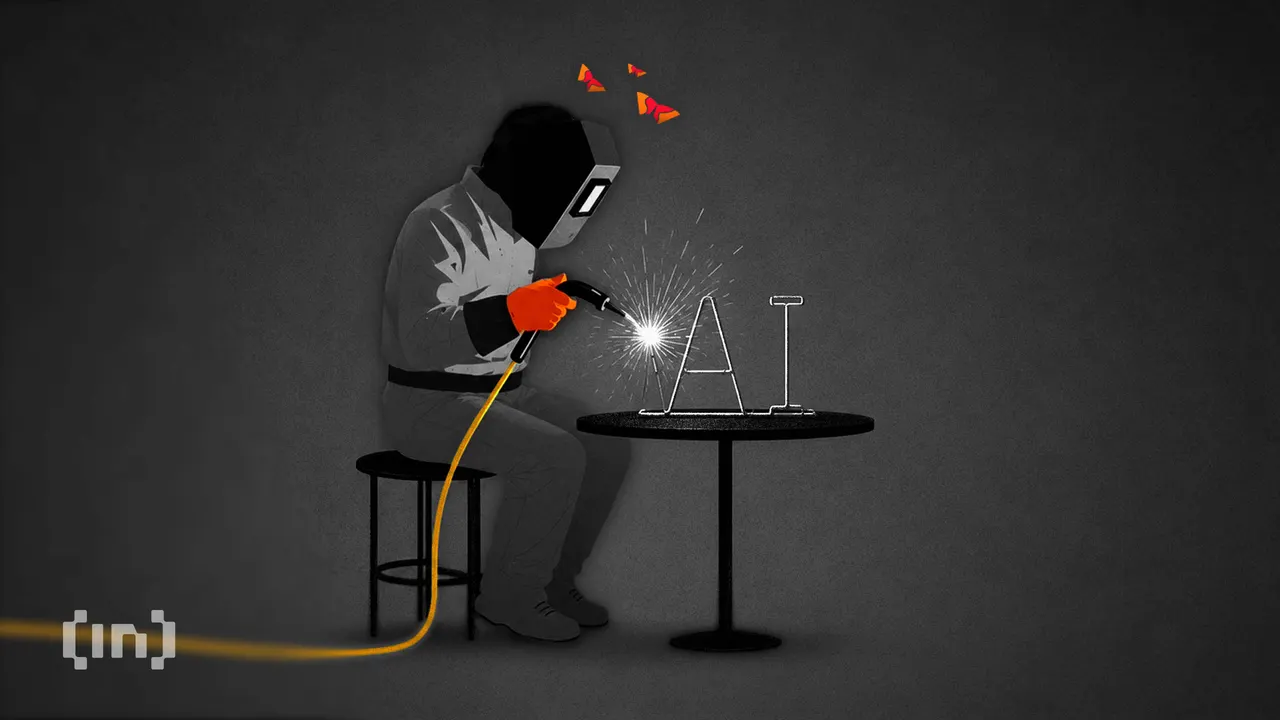
BlackRock CEO Larry Fink has flagged a different risk in the artificial intelligence (AI) boom. He warns that government deficits and tech-heavy private demand are competing for limited capital, which could make borrowing more expensive for homebuyers and businesses.
In a Wall Street Journal op-ed, Fink called today’s contest for funding the biggest he has seen in 50 years in finance.
Deficits and AI Chase the Same Dollars
According to Fink, government deficits across the developed world now compete with heavy private demand, much of it from tech firms. Power, housing, industrial capacity and other infrastructure need trillions more. US federal debt alone has reached a record $40 trillion, he noted.
“When all that investment demand collides with a limited supply of capital, borrowing becomes more expensive for everyone, from families buying homes to businesses looking to invest,” Fink wrote.
Those costs are already climbing. The 10-year Treasury yield, a benchmark for mortgages and business loans, has risen about 1.2 percentage points this year. It touched 5.34% earlier this month, its highest level since 2002.
In his view, hyperscalers hold the edge because they have the deepest pockets. Fink argued their growth should be financed without draining capital from the rest of the economy.
Follow us on X to get the latest news as it happens
How Fink Wants to Widen the Pool of Capital
Shifting the same dollars between assets will not cover the bill, Fink wrote. Instead, he proposed 3 steps.
- Scale up AI financing: Fink said much of today’s AI infrastructure financing runs through a small group of companies and lenders. The sums needed are too large for that model alone. A former mortgage trader, he suggested securitizing computing infrastructure, as mortgages once were, so more investors can fund it.
- Build the power behind AI: He pointed to China’s expansion of power generation, arguing that cheap, plentiful power will matter as much as the technology itself. He urged faster permitting and more training for electricians, welders and technicians.
- Bring in more investors: Fink called this step the most important. About 4 in 10 Americans own no stock, he noted. More long-term investors would add capital and give people a stake in growth.
Bubble Warnings Point to a Steeper Fall
Fink wrote that he is bullish on the technology and on America’s ability to finance it. He accepted that some companies may fail, as railroads and internet firms once did. Still, he said it isn’t hard to imagine a handful worth $10 trillion each.
Other recent warnings focus onthe AI trade itself. Bridgewater founder Ray Dalio called AI a classic bubble close to bursting, citing debt and rising rates.
Panmure Liberum strategist Joachim Klement expects the bubble to burst in 2027 or 2028. He warned the unwind could spark the worst crash since the global financial crisis.
Klement also said hyperscalers have largely used up their free cash flow as debt costs climb. Fink, for his part, describes the same companies as the ones with the deepest pockets.
Fink’s outlook depends on new financing, much faster permitting and more infrastructure. With those in place, he wrote, the economy can grow quickly enough to keep its debt manageable.
Subscribe to our YouTube channel to watch leaders and journalists provide expert insights