As if I didn’t have enough to obsess over, I have started monitoring my sleep.
On the one hand, I want to know everything: How long did I sleep? How badly? Was that 5 pm double espresso a terrible idea? Is the glass of champagne (or three) I have on Fridays killing my readiness? But I don’t love wearing a smartwatch or smart ring to bed. Between the wearables, nasal strips, and mouth tape , sometimes a girl just wants to go to sleep.
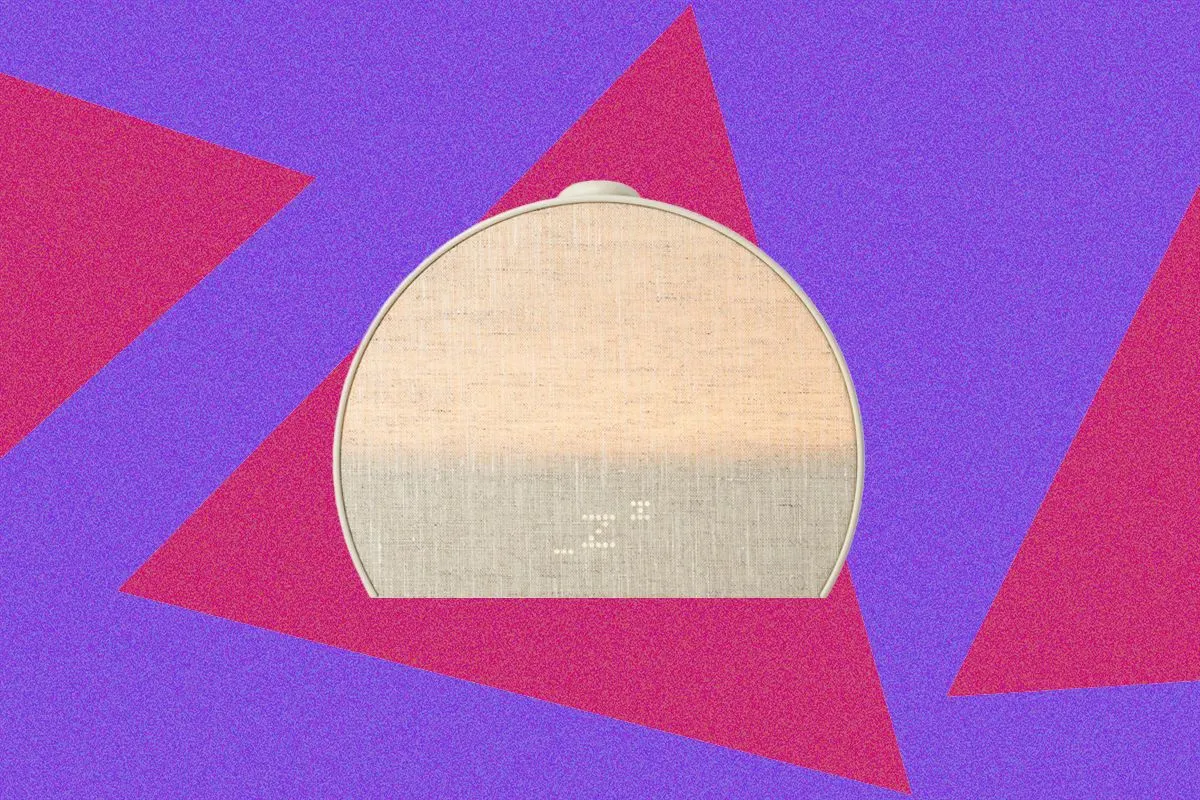
Enter the Hatch Sleep Clock, the company’s first sunrise alarm clock to offer contactless sleep tracking from your nightstand. Priced at $249, it lands between less expensive bedside trackers like the Google Nest Hub ($100) and premium systems like Eight Sleep (starting at $1,999) . It costs about as much as an Apple Watch SE 3 ($249) , but it doesn’t offer the physiological measurements you’d get from a wearable. Its audio library also remains locked behind a paywall, and controlling it through your smartphone feels counterintuitive if you’re trying to spend less time with a screen before bed.
As someone who’s never owned a sunrise alarm clock, after a month of testing the Hatch Sleep Clock, I’m sold. But for sleep tracking, I’m still going to check my Oura app.
The Hatch Sleep Clock is essentially the Hatch Restore 3 with passive sleep monitoring. It also functions as a sunrise alarm, a dimmable bedside light, and a sound machine. You can build a bedtime routine through its companion app, with turndown cues, wind-down reminders, and a morning alarm. You’ll still need a Hatch+ membership ($6 per month) to access the audio library, but unlike plenty of consumer trackers , it doesn’t put your data behind that subscription paywall.
The Sleep Clock uses a built-in motion sensor that detects micro-movements and breathing without any contact. Every morning, the Hatch app provides a report of how you slept, including when you got into bed, when you fell asleep, when you woke up, and when you got out of bed. It also compares your actual sleep with your planned bedtime routine and breaks down your sleep stages throughout the night. The reports are easy to parse, partly because Hatch collects less data than wearables , so there's less to sift through in the first place. The color-coded visuals are clean and interactive, letting you tap into more detail without overwhelming you with metrics.
Unlike many sleep trackers , the Sleep Clock skips the sleep score, which is a sensible choice given that it doesn't record any physiological metrics to inform an algorithm. Instead, it offers brief nightly notes that summarize your sleep patterns based on its motion sensor data, along with an actionable tip. Beyond that, you'll need to interpret the numbers for yourself. Some people may prefer a sleep score as a quick snapshot, but I appreciate the company's emphasis on presenting the data and letting users draw their own conclusions. Or perhaps Hatch is just saving the sleep score for a future software update.
To evaluate the Hatch’s accuracy, I compared its readings with those from my Apple Watch Series 12 and Oura Ring 5 . (Hatch says the first few nights are a calibration period, so data may be less accurate during this period.) Sleep duration estimates were generally consistent, but the most noticeable variance appeared in the sleep stages. That's a metric I tend to take with a grain of salt, regardless of what sleep tracker I'm testing. While it can offer more context into broader sleep patterns, I'm skeptical that any consumer device can precisely map brain activity minute by minute throughout the night, let alone one that only relies on motion-based tracking.
The biggest catch with the Sleep Clock is that placement has a significant impact on its tracking accuracy. Hatch instructs you to place the device on your nightstand, roughly level with your mattress and facing your chest while you lie down. It needs to be within 2 to 4 feet of you, with no objects obstructing the space between the device and your body. If your nightstand sits too low, you may need to prop the clock up on a stack of books. If it's too high, you may need to either raise your mattress or install a wall-mounted shelf next to your bed at the proper level.
Fortunately, my bed and nightstand were at the right height. My nightstand, though, is always cluttered with trinkets, and I have to keep reminding myself to move them behind the Hatch. It's a minor annoyance, but I'm sure they affect my readings. Unfortunately, I'd have no way of knowing. The app doesn't flag gaps in its data, and tracking only stops when the device can't detect a person or isn't plugged in.
Unlike mattress covers like the Eight Sleep that can monitor two sleepers at once, the Hatch only measures the person nearest to it. Couples sharing a bed should keep this in mind, as sleeping arrangements also affect the tracking accuracy.
For sleepers who care about their privacy, you can take comfort in the fact that there are no cameras or microphones pointed at you while you sleep. It won't pick up snoring or potential sleep disruptions, but it's a worthwhile trade-off. Hatch also says the device communicates over your local network and doesn't access your home network or record transmissions.
The Hatch Sleep Clock wasn’t enough to convince me to ditch the bajillion trackers already strapped to me, but it was enough to earn a spot in the bedtime routine. As if I needed one more sleep gadget.