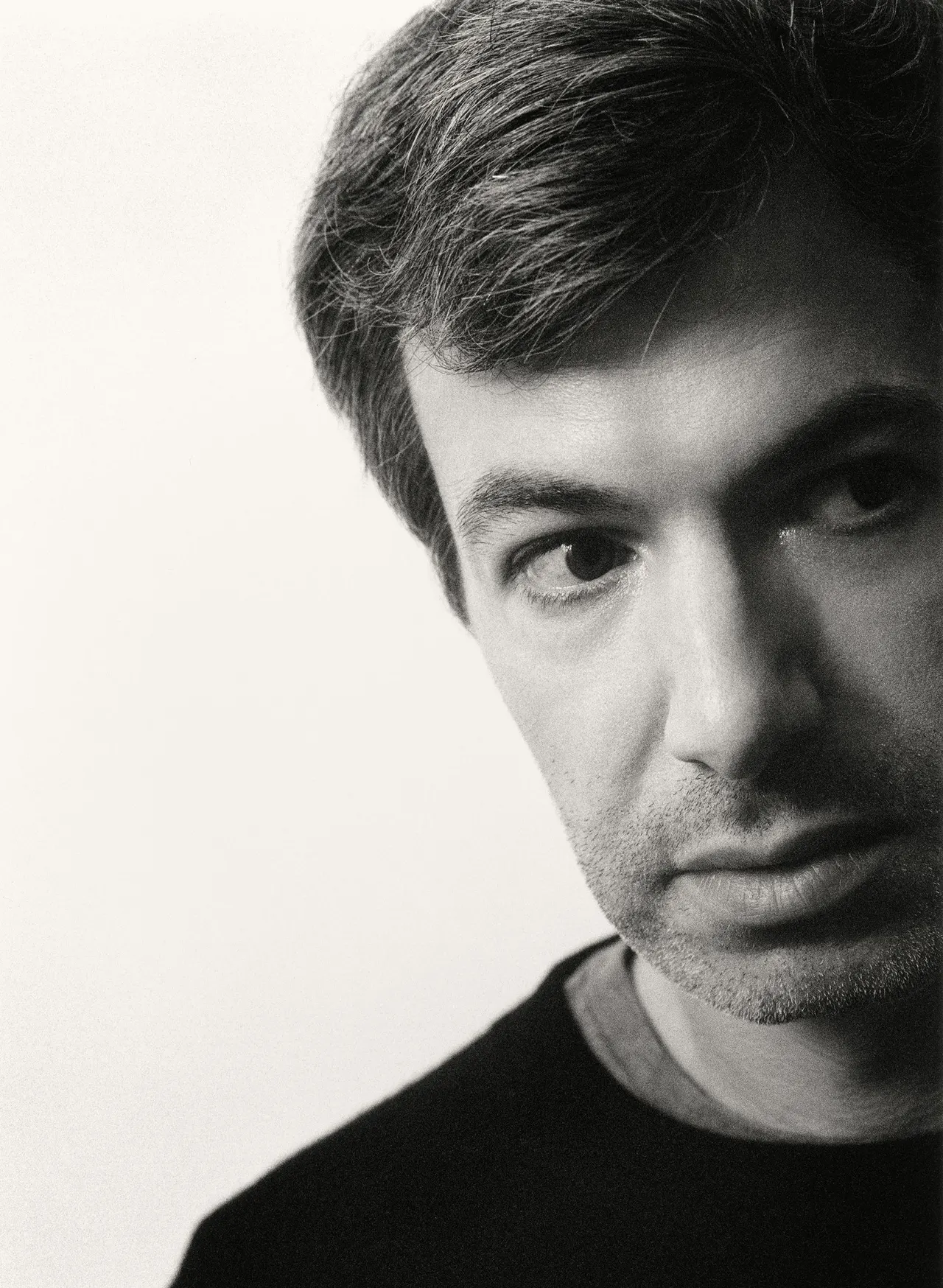
The answer, before we even got a reason, was yes. The reason, it turned out, was that Fielder would soon release a project that was so top-secret, I’d need to sign an NDA to even hear about what it was—let alone watch it. I signed, I heard, and then I saw, counting myself among the few dozen people who’d screened You Can See Everything before the film debuted in the first days of September as a secret addition to the Telluride Film Festival. If you’re a human being with internet access, you know that the buzz following Telluride was nothing short of an online thermonuclear event: Reddit forums exploded; best-in-class memes were born overnight; every journalist on planet Earth, including the staff at WIRED (who had no idea their boss was NDA’d to hell, and seemed confused when I ordered them repeatedly not to contact Nathan Fielder’s publicist), pined, pleaded, and jockeyed for access to the film. Or, even better, for access to Fielder himself. The notoriously inscrutable performer, after all, has become a cult hero for his ability to turn human discomfort into high art. He built a coffee shop called Dumb Starbucks, creating an international news event in the process. He built an entire fake bar so that one man could practice having a difficult conversation with a friend. He trained to be a commercial airline pilot—lunacy!—and flew a 737 filled with passengers (the Miracle over the Mojave), in what can only be described as the most transcendent moment of television I’ve ever seen. For a certain genre of viewer, Nathan Fielder is a comedic god among us mere mortals. He’s also, not surprisingly, rather particular. Fielder was going to do the cover of WIRED; then maybe he wasn’t. A week went by. Our features director and I didn’t sleep. Then we were a “go.” Great! For a few days, at least, until things got dicey again. This kind of back-and-forth is a normal part of booking celebrities. But given the secrecy, the buzz, the Nathan of it all—the stakes for WIRED were high. I told several people in my life that I hated Nathan Fielder. Then we were on again. I told several people in my life that I loved Nathan Fielder. You might be wondering: If I found Fielder’s pre-interview agita so stressful, why didn’t we just scrap the cover entirely? Maybe see if Aaron Sorkin was still available, or some other guy involved in some other tech-adjacent fall movie. There are plenty. The thing is, You Can See Everything is a singularly astonishing film. I’d go so far as to say that it’s among the best I’ve ever seen. Codirected by Fielder and Lance Oppenheim, it begins as a strange, captivating, occasionally hilarious 34-day psychological dance between Fielder, Elizabeth Holmes, and her partner Billy Evans before Holmes’ incarceration, and subsequently morphs into something so beguiling and brilliant that it’s futile to try to describe. After screening You Can See Everything in early September, I thought about the movie every single day until I saw it again a few weeks later. I’m still rolling it around in my brain. When a small handful of WIRED staffers screened the film before Fielder’s cover shoot, we spent hours afterward debating facial expressions, relationships, and even the meaning of single sentences. We agreed on very little, other than that Fielder—notorious for his meticulous building of worlds—seemed to have finally stumbled into one much stranger than anything he could have conjured. When I ultimately sat down with Fielder for a conversation in late September, any lingering irritation at his pre-interview jitters instantly fell away: For all of his overthinking, lines in the sand, and apparent ambivalence to press, Fielder presented as considerate and genuine. Over nearly an hour and a half, Fielder—in trademark New Balance sneakers and nondescript men’s apparel, a Summit Ice windbreaker in tow—slumped casually on a sofa, seemed to mull my questions earnestly and in good faith, and did the best he possibly could to answer them. Verbal communication, Fielder repeated several times in our conversation, isn’t always easy for him. It’s a quality that’s often put to good use in his work, and his blunt demeanor makes Fielder particularly effective in the role of truth-seeker vis-à-vis Holmes and Evans. The same can’t be said for a sit-down interview, which made my conversation with Fielder all the more endearing in the moment; at least, I told myself, the man was really trying. Our time together concluded at 2:17 pm; I’d been warned beforehand that Fielder had a Zoom meeting at 2:15 pm sharp. “I’m trusting you,” his publicist told me before leaving us alone to talk. I took the entreaty seriously, practically shoving Fielder out of the room as soon as I realized he was running late. This lovely, thoughtful man has a meeting! Days later, a thought gnawed at me: 2:15 pm is an odd time to start a meeting. On a Sunday, no less. I couldn’t shake it. Had the publicist looked me in the eyes and lied? Had Nathan? I considered asking them outright. I’ve never been one for ambiguity, and a journalist craves nothing more than to know what’s real. Then again, people make things up all the time. They present different versions of themselves to different people, obfuscate and perform, and they do it in little ways and sometimes bigger ones. Did it really matter if he’d left for a real meeting or the excuse of one? And hadn’t I spent enough time letting Nathan Fielder make me feel crazy? In the end, I decided that this time it was better not to know. It was better just to trust. And after a second talk with Fielder a few weeks after our first conversation, I learned that Elizabeth Holmes might feel the same way. The interview has been edited for clarity. KATIE DRUMMOND: I have a lot of anxiety about recording interviews. NATHAN FIELDER: Why? About losing the recording? Yeah. OK. You have a backup too. I have two. I would do the same thing. Do you? What? Double-record things? No, but if I had your job, I would. OK. Before we get into it, I just want you to know that I know how important it is for you to preserve the experience of the film. Yes. But you know, some people enjoy knowing what happens. I read this thing where they told people the end of a story, and then they had another group that didn’t know, and then the group that knew the ending said they enjoyed it more. So it could just be a me thing. Maybe it is. But I love being surprised. I love the experience of just sort of not knowing. When this interview comes out, the film will be just out in theaters. But it was a secret for three years, right? Yeah. My understanding is that only a few dozen people knew it was happening. We kept it really small. Secrecy has been a feature of your work before. What made you decide to keep it so under wraps? Why was that important to you? I think, firstly, it was a concern on the subjects’ part. No one knew where they were at first. But while we were shooting there, paparazzi started surrounding the location and all that. So one of the understandings was, we needed to keep it secret because it could affect things with them, and we didn’t want to do anything where our involvement would be a news story or change things with them. In addition to that, I think when stuff comes out about a thing, then the narrative is out there, and it may affect our ability to make the project. We didn’t know who we wanted to talk to or get on camera. We didn’t have a plan when we went in, so we were just like, “It’s best to operate in a place where no one knows it exists.” We thought it would be a net benefit. How many people did you have to lie to about this? I didn’t lie as much as say, “Oh, I can’t talk about this thing I’m working on, but I really want you to see it when it’s out.” People knew I was working on something. My family knew, people I’m close with that are trusted friends and collaborators. And now there’s a teaser out. There’s a trailer. That’s about it. How did you think about the lead-up to the film? Was that strategic in terms of deciding what to put out there and what not to? Is this strategic? I don’t know. I think everyone didn’t really know how to handle this. Even people at A24 didn’t know we were making this for a bit, because we just went and started doing it, and so it wasn’t really on their radar in terms of what it’s gonna look like. Then, they’re the pros on how to release a movie. I think they saw an opportunity in doing it all at once at Telluride. I was like, "Will that be enough time?" Because they normally have a long lead time when they first do these movie things. It was gonna give us five weeks until it was released. Oh, wow. They felt confident in their plan. And then it was a question of what we put out there. We got the sense pretty early on that she’s a very toxic figure to people everywhere, so I understood that we were dealing with material that people were gonna project a lot onto. I think everyone thought that maybe the audience will meet us halfway with some of the stuff we put out. Have you been reading the speculation? Are you reading— Speculation about what? About the film, from everyone who hasn’t seen it. What are people speculating? I haven’t seen. Theories that she’s naked, that you’re naked, that— Oh that. —that you dress up as Elizabeth Holmes, that you become her. I saw an image someone made of you with a blonde wig on. I haven’t seen a lot of that stuff. When this all came out and we did the Telluride Film Festival, my phone was off for that whole night, and then I started looking at some stuff the next day, but there was a lot, and it was a little overwhelming. I couldn’t really engage with everything. I definitely understand that people would project stuff onto a new project that feels like stuff I’ve done in the past. But this is a totally unique thing. It feels, to me, so different than what I’ve done before in the way it came together, in the way it functions, and what we’re able to explore in it. I’ve never done something like this before, but the process was fascinating, and I really enjoyed shooting this way. It was a real freeing and fascinating experience. What was freeing about it? Well, for example, I think a lot of projects usually have to be generated by you. You have a concept, and you go and pitch that concept, and then you have to present a plan to get the money to make it, and then you go and execute it. Things can change while you’re doing it, but usually if they green-light a project, you have to deliver something. Ideally. Yes. You can’t— You seem like someone who plans quite a bit. I mean, I try to. I try to plan, and then I’m always met with the absurdity of me trying to plan too much. I experienced that when I did Nathan for You. I was trying to be like, “OK, we can know where things would go.” But then the best moments were when we’re just totally surprised by something we didn’t expect, and then we end up going in that direction. And the aftermath of that was like, “Why did I think I could predict or control that?” That was part of the inspiration for The Rehearsal—that tendency that I have to want to, like, plan. There is a pressure sometimes of, “you have to deliver something,” so you want to think things through. You can’t just go into something. But with this, because I came into this feeling like the story’s been told about her, I was very interested in meeting her, but I did not see what a film about her or a project about her could be. You and Lance reached out to her initially, right? It was a bit of a both thing, because she and Billy [Evans] had approached A24 with the desire to have their life documented in some way. But no one was attached. It’s just them approaching A24. And I guess the negotiations fell apart because there was nothing to it, really. Months later, I heard that that had happened. So I called A24 and said, “Well, could I meet her?” That was the start of it all. Why her for you? Why did she seem interesting? It’s a good question. Sometimes I don’t know why I’m drawn to something. But I had read Bad Blood. Yeah. I was really interested in that book when it came out, and I thought her relationship to the media was interesting too, because she sort of went silent and didn’t talk to anyone about anything in the aftermath. I was just personally curious. Like, “I wonder what this person’s like.” And also, why now? Why is she wanting to speak and have her life documented and do it in this way? And even after I met her, if I didn’t know what I knew, I would just think I was talking with a very affable, soft-spoken, kind person. But then I kept having this thing where I was tracking my thoughts about how honest she was being, or if I was being manipulated in some way. The feeling is so odd. It felt like watching a magician. I talk about it a little in the film, but when me and Lance were first talking about her, we happened to be at the Magic Castle. I’m a member, and it just came up that way. It was sort of poetic. I told A24, “I don’t really know what the angle is, but there is something tickling in my brain.” She was about to go to prison, so we didn’t know what was gonna happen. I was like, “If you guys want, I’m down to go down and start filming and see what emerges. But we need the ability to deliver nothing to you guys if it doesn’t work out.” And they said sure. So was that freeing? Yes. It really meant I didn’t have to hold back with her or with them. Making a film or making any project is very stressful. So if we had to pull the plug because it didn’t work out, it would sort of be a relief to me. It’s a very nice zone to operate in. Lance and I both thought, “Well, at the very least, this will be an interesting week or two that we’ll have as a story.” I’ve seen it a few times. As I was watching it recently, I found myself trying to figure out: What did Elizabeth and Billy think they were bringing you in to tell? What was the story that they thought had not been told? Yeah. Right? Do you know? Do you feel like you know why they wanted you in their home, in their life? This is a question that we are still debating to this day. Me and my editor, Adam Locke-Norton, who has worked with me on The Rehearsal and for years—we were debating exactly this. Because it keeps changing. The difficult thing about this whole thing is there are so many pieces, and some of them are contradictory. You have to have a mindset of someone playing 7D chess with you, and they are so far ahead to make sense of all this stuff that it almost seems implausible sometimes. Did you worry that they were ahead of you? I didn’t worry, because I’m there, and I’m just trying to experience it and let my curiosity drive me. The first couple days, we were trying to figure out how to capture this and what they were gonna give us and what they were trying to do. We didn’t really know. We didn’t know if we would sit in there and they’d bring out papers and lay out a whole thing or they’d just be like, “We’re just gonna live our life.” They weren’t immediately coming to us with some sort of narrative they were trying to push. So we realized it was this game of figuring this out in a way. We ended up having this plan where we would come in every morning. We started with two cameras, and we eventually got to three cameras, and we had one that was on a 12-millimeter-wide lens that could get the whole main area of the house. And then we had two other cameras that were on 25- to 250 [millimeter] zoom lenses, so they could go wide, but they could also go really tight. And we’d place them in the far ends of the house. We found these angles where if anything happened at any point in the house, we could not only have it in our wide shot, but then we could get it in close-ups eventually. We only had two camera operators. Lance wouldn’t always be in there. He would sometimes be outside with the monitor. So sometimes there were only three people, and our sound guy who’d sometimes be outside. I could definitely sense that she felt the stakes were high for her, and that can cause people to be unnatural in ways that they may not be in real life. That’s a part of the work I make. I like to show how the cameras can affect how people are, a little bit. That feels the most honest way to do things. With this project as well, we were really trying to show how she is, even when the cameras aren’t there. When did you realize that you needed to be in it? That’s another thing. I started this thing being like, “I’m definitely not gonna be on camera in this.” The situation was very intense. She was going to prison. And that’s another thing about having the ability to pull the plug on the project with no consequences, why it was really nice for me, because I could also say to both of them—if I did sense there was tension or stress about this whole thing—I was very aware this is the final month that she’s gonna have for a decade with her kids and her family. I said almost every day, "If ever you’re regretting this decision, just tell me and we’ll go. Like, no problem." I’d usually bring it up if there was tension, because sometimes we’d be trying to do shoots, and Billy would be trying to stop it or just be like, “That’s enough time.” So I was like, “We don’t have to be here at all, but if we’re gonna be here, we just wanna be able to do this.” They never once said, “OK, we don’t want you here anymore” or seemed to be like, “OK, let me think about if we wanna change our minds.” That was confusing for me too. Because it didn’t make sense to me. I definitely would not want a camera crew following me for the last month of freedom that I would have. Not only would I not want a camera crew, I don’t know that I would want you there. Are you feeling that because of the conversation we’ve had so far? No, but I would— You’re saying I’m worse than the average person. No, I would’ve seen your earlier work and the way you observe people and behavior, and I’d be very stressed out at the prospect of Nathan Fielder being in my house. Yeah. This is part of the mystery that, like, doesn’t make sense to me. No offense, but why you? You know what I mean? Yeah. I asked her that on, I think, one of the first days we shot. I still don’t fully understand it. That really messed with my head. Also, I got the sense very early that she hadn’t seen a lot, but she had seen some of what I did, and she had talked to people who had seen what I did. Billy had seen more. I think she found the clip that she said she saw funny. But you know, her relationship to that … to what’s funny? I don’t even know. She said her favorite movie is Elf, the Will Ferrell movie. You have the tattoo— It’s actually my daughter’s initials, but I get that a lot. Do you love that movie? I like that movie well enough. OK. So you and her there. I like it well enough. What areas do you feel like you’re similar to her, besides liking Elf? Or in what ways? To Elizabeth Holmes? Yeah. I don’t like where this interview is going. But we’re both convicted felons, with a long track record of fraudulent behavior. We both had children to avoid prison time. We have that in common. Do you feel those things about her? Everything I just said? Well, I guess you said various things. Some things are obviously true. We both have blue eyes. I believe that her eye color is real. Here’s a question. How do people view her? I’m assuming WIRED is very in with the tech world— Yeah. How did people view that, at the time, in that world? And how do people view it now, and is it the same, or has that changed? There’s this broader culture of Silicon Valley that she operated within, where everyone’s a liar. You start a company, you lie, you fake it till you make it, and VCs expect it, and it is part and parcel of launching a business. Elon Musk is an incredible liar—lies to the public, lies to regulators, lies to lawmakers, investors, shareholders. That’s part of the game. And she, to me, in many ways, played that same game. She did it to the nth degree; she took it very far. But what she was doing at the time was very much in keeping with what startup founders do. They go out, they raise money, they talk a big game, they get magazine covers. I think today, if you ask any journalist, whether they’re a tech journalist or not, they’d say she’s a convicted felon. She’s a fraud. And I think the first time I saw the film—now I’m going on a bit of a tangent, and I’m going to have to start asking you questions again soon, but— No, I’m really curious, though. I hadn’t thought about Theranos in a long time, right? Yeah, I think a lot of people coming into this haven’t thought about Elizabeth Holmes in five, six, seven years. Yeah. I have a 9-year-old daughter, and watching Holmes with her kids in the first half of the film, I felt tremendous empathy for this woman. I was asking myself a lot of questions about her romantic relationships and wondering whether that was at the root of it all along. I wondered if there was something wrong with her. Cognitively wrong with her. And then I was getting ready to do this interview, and so I read back about everything she had done, about the timing of when she had kids. I went to screen the movie a second time and felt like such a fucking dupe for being close to tears watching her with her little kids. I still feel sad for the kids, but I felt much less empathy for her. I would say, broadly within the journalism community, Bad Blood was the definitive reported account of what she did. Mm. But I think watching the movie brings a lot to the surface for the viewer and raises a lot of questions about her and her character and what’s influencing her and what motivates her. What was I asking you? How rude of you to distract me. It’s interesting for me, I think, because I couldn’t really talk to people about this fully while I was making it, besides the people that we were there with. How did you process on a daily basis what you were experiencing? In a way, we processed it with each other. One of the reasons early on that we felt this could actually be a project was because of what came out of those processing sessions. At the end of the day, I would have in my head what I thought was a very clear idea of what was happening, and Lance or our camera guy, Jonathan Mitchell, or our DP, David Bolen, or our sound guy, Richard Carlos, they would all have a different take on what actually happened. I was like, how is this possible? We’re all in this room experiencing this thing. We’re all witnessing something and having a different idea of what’s going on. And I thought that was a basic premise to explore and chase. At Telluride, you said that you still don’t know what you experienced. You want audiences to help you understand. What specifically do you want to hear from people after this comes out? I generally don’t see myself as having a great framework for understanding all the variables of things and people. In a lot of the work I do, because it’s shorter or television sometimes, you have to take a human that’s very complex, obviously, with a lot of nuance in a lot of different areas, and you’re generally trying to simplify. You have to be like, “OK, well, this is the essence of the situation or the person, or this is an interesting flavor of them, and that’s what we’re gonna show.” But with this, we’re really trying to give the viewer everything. We’re trying to focus on these moments that we couldn’t really make sense of fully. Like I was saying, still to this day, I’m debating. Why are me and my editor talking, two days ago, about trying to understand certain things? I’ve talked to people who have seen it, and they’re all bringing out new ideas that I would never even consider. So you trust the audience. I just think people are smart. I don’t see myself as the most knowledgeable at everything, and I love learning from the world and from people. I definitely don’t come to anything being like, “I know what the answers are” or…
Tech
Nathan Fielder’s Surprise Call From Elizabeth Holmes: ‘I Trust You’
The codirector of “You Can See Everything” talks exclusively to WIRED about truth, lies, and Theranos.