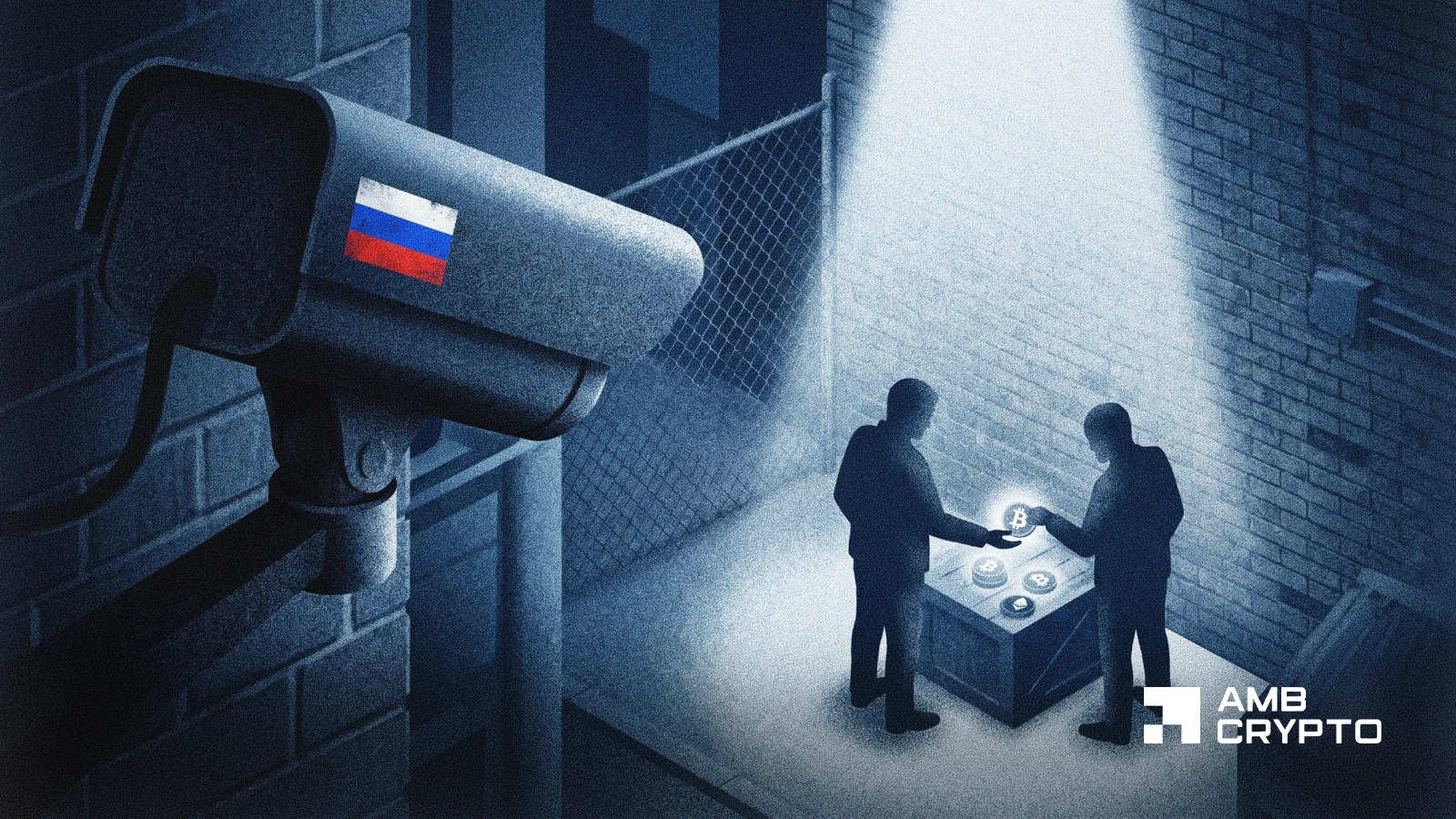
Russians have just eight months to trade Bitcoin [BTC], Ethereum [ETH], and other crypto assets with each other.
Starting from the 1st of July, 2027, this direct crypto trading among peers that does not need a regulated third party, also known as peer-to-peer (P2P) trading, will become illegal.
This is part of Article 30 of the Federal Law No. 282-FZ (On Digital Currencies and Digital Rights). The legislation was signed into law in August by President Vladimir Putin and became effective on the 1st of September 2026.
In fact, the same framework allowed a new licensing regime for firms and banks that want to operate crypto exchanges and act as digital asset custodians. Already, Russia’s largest bank, Sberbank , has got two licenses and plans to offer crypto trading from December.
While the new Russian crypto regulation regime could accelerate institutional adoption, the strict rules against P2P and self-custody transfers may squeeze out some retail investors.
Per the new rules, crypto trading will only be permitted via “entities organizing the circulation of digital currencies” or regulated platforms. That rules out P2P transfers.
Additionally, withdrawals to self-custody are banned. Russian users can send assets from self-custody wallets to regulated entities. But they can’t move the funds to self-custody wallets. Unlike P2P transfers, which will be outlawed by 2027, the self-custody withdrawal ban is already effective.
Foreign stablecoins such as Tether’s USDT are permitted for public trading on regulated platforms. Put simply, the Russian government will have full visibility into crypto capital flows, including custodied assets.
Interestingly, killing P2P and self-custody withdrawals removes crypto blind spots that most global regulators are trying to address.
For Russia, the tight rules also include a cap for retail crypto investments at $3.5K per year. Crypto will not be used for payments locally in Russia, but it will be allowed for cross-border and international trade.
In other words, Russia wants to rein in capital flight by limiting citizens from moving funds to offshore and self-custody platforms.
This will also ensure better transparency and reduce tax evasion. At the same time, importers and exporters will be allowed to use crypto for international trade, likely to bypass sanctions.
Globally, Brazil , Thailand, the EU zone, and other jurisdictions are adopting nearly similar tight P2P and self-custody transfers. But they seek to deal with anti-money laundering, fraud, and tax evasion, making their policy incentives slightly different from Russia’s.
That said, global P2P and personal wallet flows increased +300% to $228B in the past year, according to Chainalysis. This underscores rising user distrust in the traditional system and regulated entities. But governments want to crack down hard on this loophole.