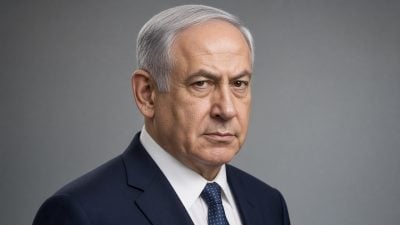
Israel's prime minister says he has asked for a plan to build an alternate economy on blockchain and digital assets if banking sanctions arrive
Israeli Prime Minister Benjamin Netanyahu wants a financial backup plan, and he wants it on a blockchain.
In an interview on October 23, 2026, Netanyahu argued that Israel needs an ‘alternate economy’ in case it faces banking sanctions. He named blockchain technology and digital assets as workable options and said he has asked for a comprehensive plan to be prepared.
The remarks came during an appearance on Channel 10. Netanyahu framed blockchain and digital assets as feasible alternatives if traditional banking channels were ever restricted.
He did not name any specific blockchain protocol. He also did not mention any company or token.
The timing matters too. The comments came ahead of Israel’s elections. They also referenced the risk of losing US defense aid, which has historically been a major pillar of Israel’s security budget.
The broader backdrop is a conversation about financial independence. Netanyahu’s comments arrived amid discussion of reducing Israel’s reliance on US military financial aid, which has historically amounted to tens of billions annually.
The UK has recently introduced measures targeting Israeli settlements, and that move was part of the context around the remarks.
In April 2026, regulators approved BILS, a shekel-backed stablecoin running on the Solana blockchain.
Daily. Free. Join 34,000+ readers across crypto, finance, and policy.
The Bank of Israel has also been loosening its own rules. In October 2026, it updated Directive 411 to make it easier for banks to manage funds connected to virtual currencies.
Put those two pieces together and Israel has a modest foundation. A shekel stablecoin exists. Banks have clearer permission to deal with digital assets. What does not yet exist is anything resembling an ‘alternate economy.’
Building a sanctions-resistant financial system is a much bigger job than approving a stablecoin. It involves payments, trade settlement, banking relationships and access to foreign currency.
Sanctions pressure typically works by targeting the points where money enters and exits the system. A blockchain does not make those exit points disappear.
Public blockchains record transactions openly. That is great for auditors, and not obviously ideal for a country trying to route around outside scrutiny.
For the crypto industry, the most significant part may be the signal rather than the substance. A sitting prime minister publicly called blockchain and digital assets a feasible foundation for national financial resilience.
The BILS stablecoin is the most obvious beneficiary of the narrative, at least on paper. If a national plan ever materializes, a shekel-backed token already approved by regulators would be a natural starting point. But Netanyahu did not name it.
BILS runs on Solana, but nothing in Netanyahu’s remarks pointed to any particular network.
The realistic watch list is short. First, whether the requested plan is actually produced and made public. Second, whether it survives the upcoming elections. Third, whether it names concrete infrastructure, such as specific blockchains, stablecoins or bank partners.