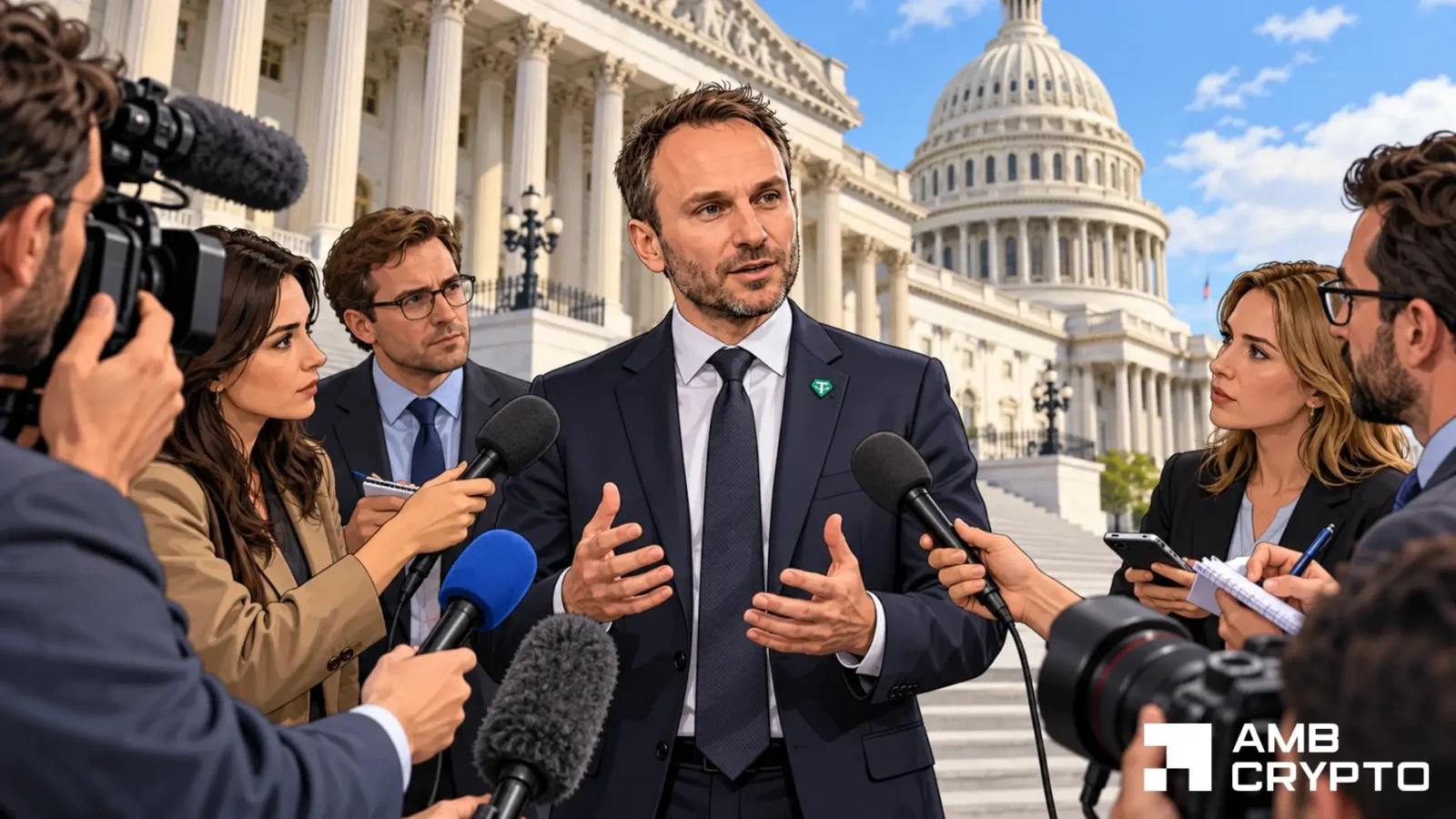
Tether CEO Paolo Ardoino has challenged a Senate staff report criticizing the company’s handling of Iran-linked wallets. In a post, he claimed Tether’s actions caused related stablecoin transaction volumes to fall 94% .
The dispute is about whether the USDT issuer stopped sanctioned networks from moving funds on time. Ardoino claims there were early freezes, but Senate investigators are saying there were cases where money continued flowing before Tether blocked the addresses.
According to Ardoino, since 2023, Tether has frozen the addresses concerned at least four weeks before formal designations by U.S. and Israeli sanctions authorities.
He also claimed the company acted before blockchain analytics firm Chainalysis labeled the reported addresses 99% of the time.
The September 28 report came from Democratic staff of the Senate Permanent Subcommittee on Investigations, led by ranking member Richard Blumenthal.
Investigators looked at 846 wallets that were sanctioned or targeted to be seized because of associations with Iran and its regional proxies. They found that 84% of these addresses transacted only in USDT, or almost entirely in USDT .
The report also described 39 addresses linked by Israeli authorities to a Hezbollah financier in June 2023. According to investigators, Tether froze five but waited until March 2024 before it blocked the remaining 34 .
More than $34.6 million in USDT left those wallets after the seizure notice became public, the report said. Investigators acknowledged some responses to sanctions but characterized Tether’s efforts as inconsistent.
In its September 28 response, Tether said it was part of about $550 million in Iran-linked USDT freezes in 2026.
The company highlighted more than $344 million frozen across two addresses in April and over $130 million across four wallets in July. It said the April action preceded the addresses’ formal addition to U.S. sanctions listings by one day.