Big Tech can cover about half the AI buildout from its own cash, leaving private credit to fill much of the rest
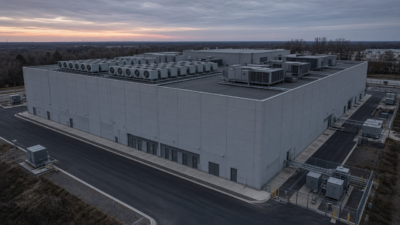
Morgan Stanley expects global data center capital expenditures to reach approximately $2.9 trillion from 2025 to 2028. The driver is no surprise: artificial intelligence, and the enormous physical footprint it requires.
The more interesting number is what comes after the total. By the bank’s math, the biggest tech companies can only pay for about half of it themselves, which leaves a financing gap estimated at $1.5 trillion.
Morgan Stanley’s forecast splits the spending into two buckets. Around $1.6 trillion is expected to go toward IT hardware, meaning chips and servers.
The remaining $1.3 trillion is earmarked for physical infrastructure and construction.
The hyperscalers carry the heaviest load. Amazon , Microsoft , Alphabet , Meta , and Oracle are projected to self-fund about $1.4 trillion through their own cash flows.
Subtract the self-funded portion from the total and you land on the estimated $1.5 trillion external financing gap.
Morgan Stanley’s research suggests private credit markets are anticipated to contribute roughly $800 billion of the shortfall. The vehicle of choice is asset-specific structures, where loans are tied to particular facilities or equipment rather than to a company’s broader balance sheet.
Other commitments are piling up alongside the debt. Hyperscaler lease commitments exceed $1.2 trillion in undiscounted future payments, according to the research findings.
Daily. Free. Join 34,000+ readers across crypto, finance, and policy.
Nvidia also appears in the financing picture. The chipmaker has been involved in discussions over backstop guarantees ranging up to $250 billion to support data center debt financing.
Nothing in the research indicates those discussions have been finalized.
Money is only one constraint. Revised forecasts show the US data center power shortfall increasing to 32 to 33 GW by 2028.
A recent piece published on ZeroHedge argues that private credit is funding the AI buildout against collateral with a short clock.
The author builds on reasoning from Alex Karp, whom the piece describes as one of the most contrarian CEOs ever. According to the author, Karp spent September making an argument most of the market has not yet absorbed, and the writer believes that logic extends one layer further down the technology stack.
The author expects that Washington will eventually backstop the private credit being used to finance AI data centers. That forecast is the author’s own view, and the piece frames it as an opinion about where risk ultimately ends up.
For investors, Morgan Stanley’s numbers sketch a market where the largest buyers of AI infrastructure have run past what their cash flows can cover. The research points to an opportunity in private credit, where asset-specific arrangements may offer higher yields than conventional corporate debt.
The $1.2 trillion in lease commitments deserves close attention. Those payments are what make much of the construction lending work, so any pullback in hyperscaler demand would ripple through to the developers and their creditors.
The Nvidia guarantee talks are another thread to watch. Supplier-backed financing can keep demand flowing, but it also links the health of a chipmaker more tightly to the debt of its customers.