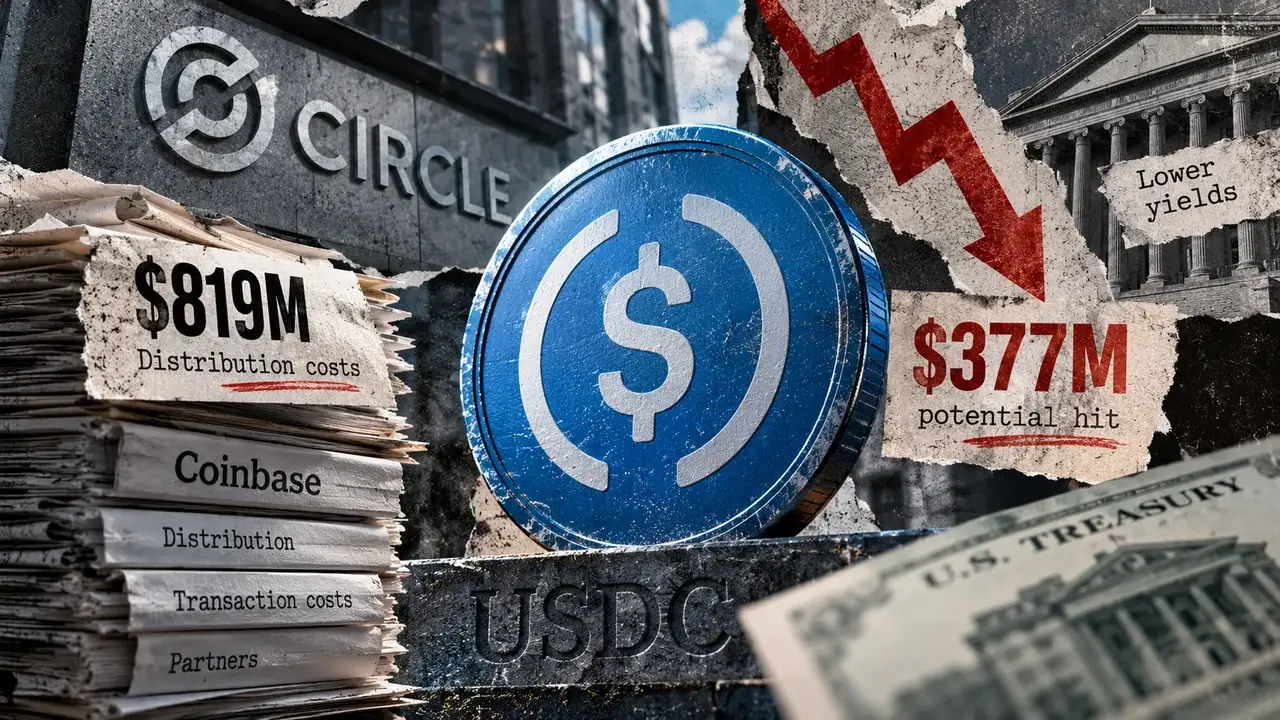
Stablecoin issuer Circle spent 93% of its first-half revenue on distribution, operations, and investment as USDC processed more than $36 trillion in transactions.
The stablecoin issuer generated about $1.4 billion in revenue in the first six months of 2026, but $819 million went to distribution partners and transaction costs, while another $473 million covered operating expenses and network investment.
Circle retained roughly seven cents of every dollar earned as net profit, about $103 million.
The figures, released Oct. 16 by Chief Commercial Officer Kash Razzaghi, form part of Circle's response to newer stablecoin providers promising businesses a bigger share of the earnings generated by digital dollars.
Circle argues that the money it retains must pay for the banking access, liquidity, and compliance systems that let USDC operate across international markets.
Circle earns most of its revenue from the assets backing USDC, which include cash and US government securities. Exchanges, wallets, and payment companies that attract users and maintain USDC balances receive a share of the income those balances generate.
That arrangement makes distribution a significant expense, but it also gives major partners a financial incentive to promote USDC. The more customers and balances a platform brings to the network, the more it can earn.
Coinbase remains Circle's largest and longest-standing distribution partner . Average USDC held across the exchange's products reached a record $20 billion in the second quarter, up 44% from a year earlier, according to figures Circle cited.
Circle has been extending that approach beyond its longstanding US partner. Binance signed a five-year commercial agreement in September and invested $100 million in Circle , while more than 150 other partners have an economic interest in USDC's growth.
Those agreements give Circle access to exchanges, fintech applications, banks and payment services that already serve millions of customers. They also make the issuer's share of retained revenue an increasingly important consideration as rival stablecoins compete for the same distribution channels.
Circle said USDC processed more than $36 trillion in on-chain transaction volume in the first half of 2026. By June, it accounted for approximately 77% of global stablecoin transaction volume, up from 60% a year earlier, according to the company's figures.
The transaction activity reflects how extensively USDC moves across blockchain networks. Separately, Circle reported more than $315 billion in combined issuance and redemptions over the six months, about $1.7 billion daily.
Second-quarter minting and redemptions totaled $170 billion, up 105% from the same period last year, indicating growing demand for moving money between traditional banking accounts and blockchain-based dollars.
Supporting that activity requires substantial cash reserves and banking infrastructure, particularly as payment companies increasingly demand access to dollars outside normal business hours.
Circle says direct customers have always been able to redeem USDC without fees through regular banking channels, where settlement can take up to two business days.
The company now offers eligible customers free, near-real-time redemptions through the Circle Payments Network and its platform products, allowing participating businesses to convert USDC into dollars around the clock.
Circle holds cash at banking partners so customers can receive dollars when they redeem USDC, including during weekends and holidays. That money must remain readily available and typically earns less than funds invested in Treasury securities.
Maintaining those balances, along with the banking relationships needed to move them, ties up resources Circle could otherwise invest elsewhere.
Razzaghi's statement directly challenged newer stablecoin providers that claim established issuers retain too much reserve income and charge excessive redemption fees.
Circle's position is that sharing more earnings with distributors must be balanced against the expense of maintaining the infrastructure required to support growing transaction activity.
The company pointed to more than 55 licenses and regulatory registrations, relationships with over 25 banking partners and native USDC deployments across more than 35 blockchains.
It also highlighted reserves held in a government money market fund managed by BlackRock and custodied at BNY , alongside compliance operations covering 185 countries .
These investments help Circle serve financial institutions operating under different regulatory requirements while maintaining the liquidity needed to process large withdrawals.
However, competing stablecoin issuers are increasingly offering payment platforms and other distributors greater participation in reserve earnings, creating pressure on the economics of Circle's existing arrangements.
The company now faces the commercial challenge of attracting additional USDC balances while preserving enough revenue to fund its expanding settlement network.
Circle is scheduled to report third-quarter financial results on Nov. 4, giving investors another chance to assess how distribution costs are changing as the issuer expands partnerships and offers faster, free redemptions to more businesses.
Oluwapelumi values Bitcoin's potential. He imparts insights on a range of topics like DeFi, hacks, mining and culture, underlining transformative power.
Gino Matos is a law school graduate and a seasoned journalist with six years of experience in the crypto industry. His expertise primarily focuses on the Brazilian blockchain…