The U.S. Commodity Futures Trading Commission (CFTC) is figuring out a different way to get around Congress’s failure to pass the CLARITY Act during its September vote.
According to CFTC Chairman Michael Selig, the organization is planning to bring more of the U.S. crypto market under a single federal regulatory framework.
Selig believes the agency can use its existing authority to introduce new rules for crypto exchanges, expand access to leveraged trading, and reduce the regulatory confusion caused by different state laws.
Speaking in a recent interview with David Hoffman of Bankless, Selig noted,
Regulatory certainty in crypto markets shouldn’t come with an expiration date.
We can get clear rules of the road in place using our existing authority. We want to do it across party lines. We don’t want this to be some, you know, pure one-sided bipartisan effort.
Currently, crypto exchanges such as Coinbase and Kraken navigate different state-level licensing requirements to offer services across the United States.
Because of this, a fragmented system has been created in which an exchange may be permitted to offer a particular service in one state but face restrictions in another.
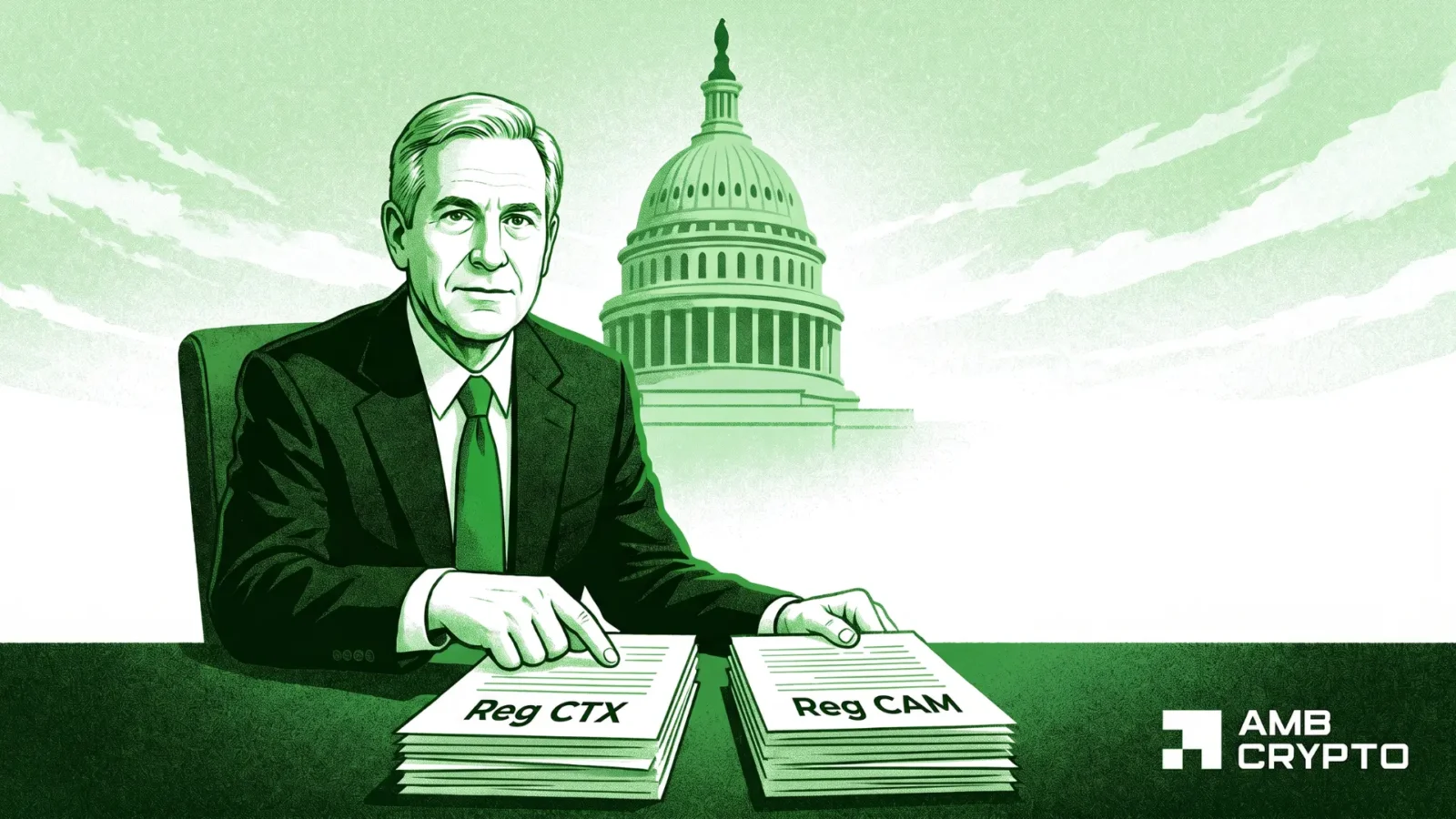
Hence, Selig wants to address this problem through two initiatives: Regulation Crypto Asset Transactions (CTX) and Regulation Crypto Asset Markets (CAM).
Together, they aim to establish a clearer federal route for crypto trading platforms to operate nationwide, although the proposed rules are still in the early stages.
Here, CTX aims to let U.S. retail investors trade spot crypto using margin and leverage. Meanwhile, CAM proposes a federal registration pathway for exchanges, potentially reducing state-by-state licensing requirements.
If looked at carefully, these proposed rules have been introduced to prevent another FTX-like collapse. Additionally, the CFTC is also aiming to strengthen customer fund protections and address conflicts of interest.
We would have preferred to have a federal regulatory framework codified into statute, but we go to war with the statute we’ve got and we’ve got clear authority and we’re going to use it.