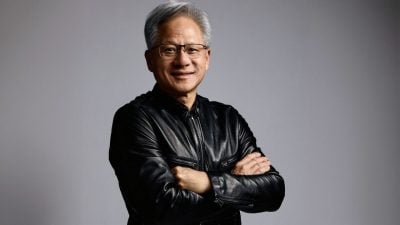
NVIDIA official newsroom (nvidianews.nvidia.com/bios/jensen-huang)
Third-quarter lobbying disclosures show big tech pushing back on bipartisan chip export proposals moving through the Senate's defense bill
Some of the biggest names in artificial intelligence spent the third quarter in Washington working against new limits on AI chip exports. Nvidia , Anthropic , Google , and Intel all lobbied against the proposals, according to Punchbowl News.
The reporting, published October 20, 2026, draws on lobbying disclosures covering Q3 2026. It lands while Congress is still deciding how tightly to control who gets America’s most advanced semiconductors.
The lobbying targeted specific measures advancing through the Senate’s version of the National Defense Authorization Act, or NDAA. That is the annual must-pass bill that funds the US military. Lawmakers often attach policy riders to it because it almost always becomes law.
Three bills are in the crosshairs: the AI OVERWATCH Act, the Chip Security Act, and the MATCH Act. Each contains provisions aimed at regulating how AI chips leave the country. The proposals have drawn bipartisan support, a rare feature in the current Congress.
The broad goal is to tighten US export controls on advanced AI semiconductors. Sales to China sit at the center of the debate. Supporters frame it as a national security question about who gets access to the hardware that trains frontier AI models.
Nvidia and AMD have also gone straight to the executive branch. As of late September 2026, both companies had stepped up outreach to the Trump White House and the Commerce Department. Their aim is to block or delay restrictions on AI chip sales to China.
Daily. Free. Join 34,000+ readers across crypto, finance, and policy.
Nvidia’s resistance has a clear financial backstory. In 2025, the company took a $4.5 billion charge tied to export rules affecting its H20 chips.
The industry, however, is not marching in lockstep. Anthropic appears on the list of Q3 lobbyists, yet the company has at times backed stricter export measures.
OpenAI is a separate twist. The company previously pushed for stringent restrictions on chip exports to China. It now appears to be shifting that stance, according to the research behind the Punchbowl reporting.
Export controls on advanced AI chips are not new. Starting in 2022, the Biden administration ramped up restrictions designed to slow China’s progress in artificial intelligence. The Trump administration eased certain export regulations in early 2026, allowing for case-by-case reviews of specific chips.
Whether the AI OVERWATCH Act, Chip Security Act, and MATCH Act provisions survive into the final bill will set the tone for export policy going forward. Lobbying disclosures for the next quarter should show whether companies are spending more or quietly accepting the outcome.
Nvidia and AMD’s outreach to the Trump White House and Commerce Department signals they see the administration as a potential ally. How Commerce responds could determine how any new law is actually applied.