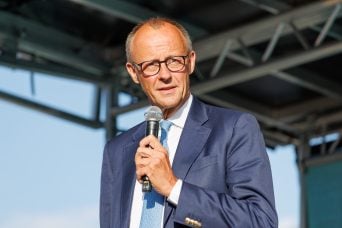
Chancellor Friedrich Merz unveiled the "Made for Germany" initiative, backed by 147 companies and investors targeting commitments through 2028
Germany wants to be known for more than cars and precision engineering. On October 20, 2026, Chancellor Friedrich Merz unveiled corporate investment pledges exceeding €800 billion through 2028, aimed squarely at defense, semiconductors, and artificial intelligence.
The announcement came at the “Invest in Germany” summit in Berlin under a banner called “Made for Germany.”
The initiative counts 147 companies and investors as members. Together, they have pledged more than €800 billion in investments, with a target window running until 2028.
The word to underline is “pledged.” These are commitments, not wire transfers, and the money is expected to flow over the next several years rather than all at once.
The headline commitment came from Amazon . The company pledged €16 billion for 2027 to develop AI infrastructure, along with logistics operations and data centers in Germany.
Merz also set a target to quadruple Germany’s AI computing capacity by 2030.
The pledges are not a sudden pivot. They build on earlier commitments announced around mid-2025, so the October summit reads more like a progress update with a bigger number attached.
Daily. Free. Join 34,000+ readers across crypto, finance, and policy.
The summit leaned on some encouraging data. Foreign direct investment in Germany rose by 50% in 2025, reaching €86 billion.
The International Monetary Fund has also turned slightly more optimistic. The IMF upgraded its forecast for Germany’s GDP growth to 1.3% for 2026.
The corporate pledges arrive alongside a separate, government-led spending push. Germany plans to borrow more than €800 billion by 2030 to fund expanded defense spending, with a defense target of €109 billion set for 2027.
It is worth keeping the two €800 billion figures apart. One is private-sector pledges through 2028, and the other is public borrowing for defense through 2030.
The initiative reflects a push to protect Germany’s technological competitiveness and economic independence, especially amid rising global tensions. A country that cannot produce its own chips or run its own AI models depends on others for both its economy and its security.
Merz also turned his attention to Brussels. He stressed the importance of EU-level rules that encourage AI innovation rather than slow it down, arguing that a supportive policy framework is essential for future progress.
The risks are mostly about execution. Corporate pledges can shrink, slip, or quietly get redefined when economic conditions change, and three years is a long time in boardroom planning cycles.
Quadrupling AI computing capacity by 2030 is also a physical challenge, not just a financial one. Data centers need land, grid connections, and permits, and any of those can become a bottleneck long after the checks are signed.
Financing more than €800 billion in defense spending by 2030 adds a significant layer of government debt, which bond markets and budget hawks will watch closely as the 2027 target of €109 billion approaches.