Elon Musk expects Tesla’s Optimus robot and Cybercab to generate most of the company’s future value. His prediction places artificial intelligence and autonomous transportation at the center of Tesla’s long-term strategy.
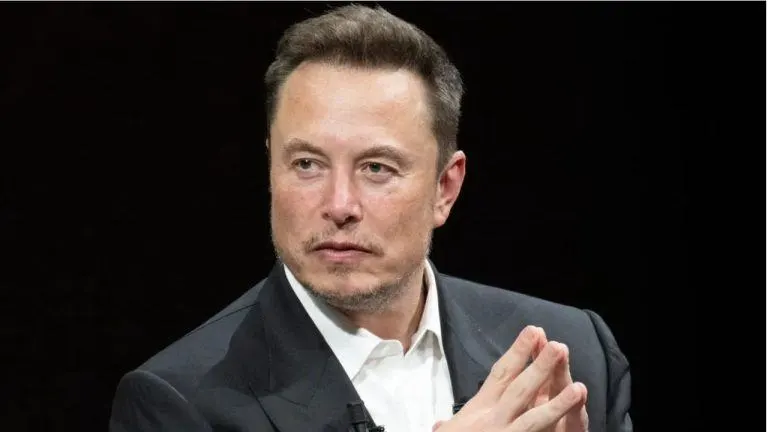
Tesla’s (Nasdaq: TSLA) future valuation will depend primarily on humanoid robots and autonomous vehicles rather than conventional car sales, according to CEO Elon Musk. In an Oct. 18 post on social media platform X, the executive identified two products he expects to account for most of the company’s future value.
“Optimus and Cybercab will be the vast majority of Tesla’s value.”
Optimus is a humanoid robot designed to perform physical tasks, while Cybercab is a purpose-built driverless vehicle. Both initiatives aim to expand Tesla’s business beyond selling vehicles to individual customers.
Musk has previously outlined Tesla’s humanoid robot plans , including large-scale production that could increase productivity across industries.
Tesla’s Cybercab program carries riders in limited areas of Austin, Texas, as the newest addition to its Robotaxi fleet, which offers autonomous ride-hailing, allowing passengers to book driverless vehicles. Unlike conventional vehicle sales, the service could generate recurring revenue from passenger trips, depending on demand, operating costs, and regulatory approval.
Optimus could generate revenue through sales or deployment in factories and other workplaces. Its commercial potential depends on reliable performance, affordable production, and widespread adoption.
Both projects could benefit from Terafab, an AI chip factory that Tesla and SpaceX have committed $16.8 billion to begin building in Grimes County, Texas. The Tesla-SpaceX Terafab project could support computing requirements for robots and autonomous vehicles.
Musk also identified four technologies he believes could achieve extraordinary economic scale: superintelligence, robotics, solar power, and space transportation.
“The only things that will scale to incredible size (K2 and beyond) economically are super intelligence, robots, solar power and mass to space.”
Superintelligence refers to AI that surpasses human intelligence. K2 refers to a Type II civilization on the Kardashev scale, a theoretical classification of civilizations by energy use. Such a civilization could harness energy on the scale of an entire star.
Musk suggested that superintelligence and robots could enable further advances in solar energy and space transportation, adding:
“And, of course, if you have the first two, the rest will follow.”
His remarks follow earlier predictions that AI and robots could double global economic output within a decade. At the World Economic Forum in January, Musk discussed how AI, robotics, and space transportation could transform the global economy.
Musk’s comments responded to a Teslaconomics post urging investors to consider Tesla and SpaceX’s broader potential rather than focusing on Roadster sales and profit margins.
Tesla unveiled its redesigned Roadster on Oct. 15, featuring SpaceX-derived propulsion technology. Production is targeted for 2028, following delays since the vehicle’s original introduction in 2017.
The electric car company is scheduled to release third-quarter financial results Oct. 21, providing an opportunity to assess progress in its automotive, robotics, and autonomous transportation businesses.
SpaceX could eventually be worth far more than today's global economy, Elon Musk argues, extending his vision of industries beyond…